Your medical history is one of the most private things you own. It lives in digital systems protected by encryption, the quiet math that scrambles your records so only the right people can read them. A new kind of computer could eventually undo that protection.
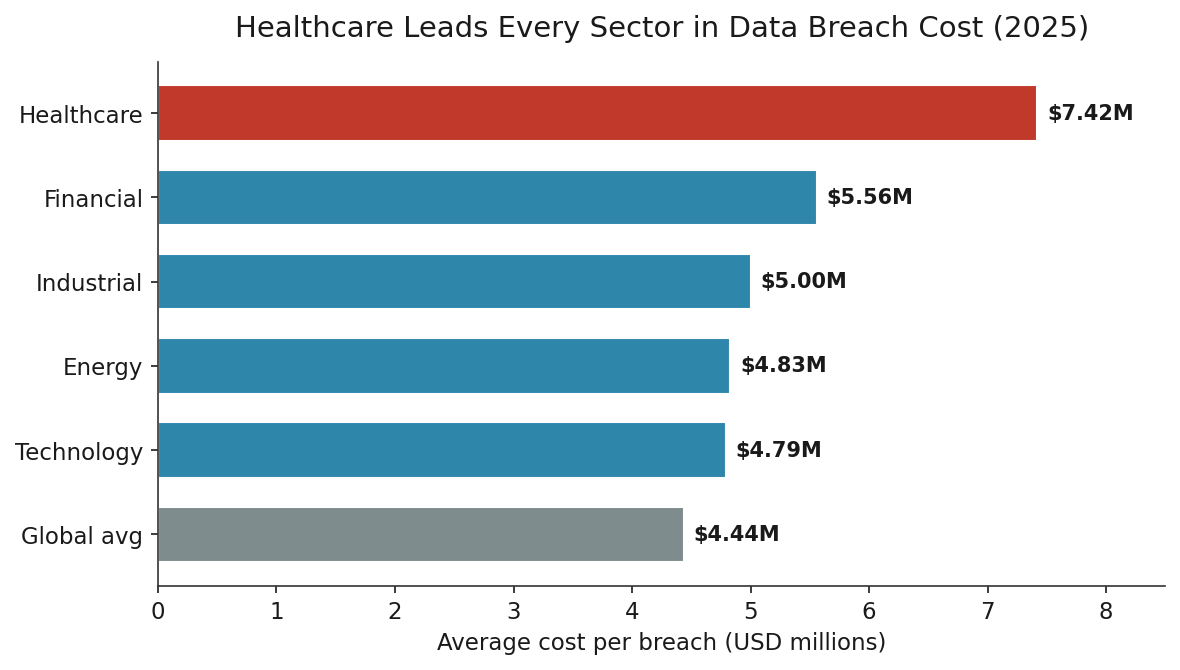
Healthcare already carries the heaviest price when data is exposed. The IBM Cost of a Data Breach Report 2025 found the sector averaged $7.42 million per breach, the highest of any industry for the fourteenth year running. Quantum computing raises the stakes further. Here is what the threat means for your records, and the practical moves that keep them protected.
Key Takeaways
- Quantum computers could break the encryption (RSA and ECC) that protects patient records, payments, and messages.
- Attackers already steal encrypted data today, planning to unlock it later once the hardware matures.
- Health records stay sensitive for decades, which makes them a prime long-term target.
- New encryption standards exist now, and clinics can begin moving to them gradually.
- You can ask your providers what they are doing to protect your information for the long haul.
What Quantum Computing Means for Your Health Records
Quantum computing is a new way of processing information that can solve certain math problems far faster than today’s machines. That speed is the problem for privacy, because most encryption relies on math being slow to reverse. A powerful quantum machine could crack codes that would take a normal computer thousands of years.
Most of your sensitive data is locked with systems called RSA and ECC. These protect patient portals, prescriptions, and the messages between your doctors. A future quantum computer running a method known as the Shor algorithm could unravel that protection, exposing the records underneath. For a deeper technical breakdown, this guide to quantum computing security risks for businesses explains how the math behind these attacks works.
The danger is not that your portal password is weak. It is that the lock itself, used across the whole healthcare system, could one day be picked.
Why Criminals Are Stealing Encrypted Data Today
You might assume a threat years away can wait. It cannot, because of a tactic security experts describe as harvest now, decrypt later. Attackers copy encrypted health data today and simply store it, betting that a future machine will open it. Cheap storage makes hoarding huge volumes of records entirely practical for well-funded groups.
Your records are an ideal target for this patient kind of theft. A stolen credit card gets cancelled in a day, but your diagnosis, genetic information, and medical history stay sensitive for a lifetime. Data taken now could still cause harm a decade from now.
|
⚠ Warning: Information with a long shelf life faces the greatest exposure. Health records, unlike a password, cannot simply be reset once they are out. |
The scale of healthcare theft is already severe. Stolen medical files are prized on criminal markets because they bundle identity, insurance, and financial details in one place. That is part of why breaches in this field are the slowest to catch, taking healthcare teams an average of 279 days to find and contain, according to IBM. Reducing that window starts with knowing how records flow, which is why tidy systems such as well-structured medical documentation matter more than people realise.
Which Protections Break and Which Ones Hold
Not all encryption faces the same fate. The systems most at risk are the public-key types that secure connections and verify identities. A capable quantum computer could break RSA and ECC directly. The chart below shows the split between what falls and what endures.
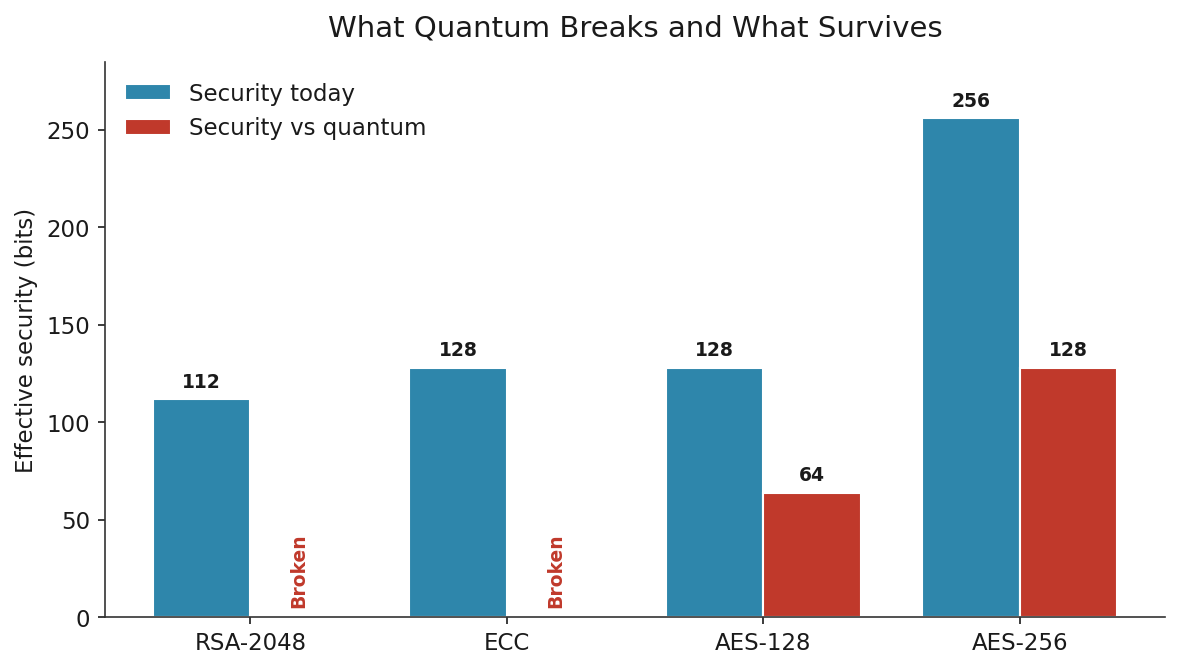
The encryption that scrambles stored files, called AES, holds up far better. A quantum method named Grover algorithm weakens it, yet simply using a longer key (AES-256) keeps it safe for the foreseeable future. To see how this everyday scrambling guards information, this explainer on healthcare data security compliance standards breaks it down in plain terms.
|
Encryption type |
What it protects |
Quantum risk |
|
RSA |
Secure connections, digital certificates |
High, can be broken |
|
ECC |
Mobile and app security, key exchange |
High, can be broken |
|
AES-128 |
Stored files and databases |
Moderate, weakened |
|
AES-256 |
Stored files and databases |
Low, stays strong |
Table 1: A simple map of which protections quantum computing threatens most.
[VIDEO: “Q-Day Explained: How Quantum Computing Threatens Today’s Cryptography” — https://www.youtube.com/watch?v=rTM95-gZtOs]
Brief note: this IBM Technology explainer walks through Q-Day and why encrypted data is at risk well before quantum machines fully arrive.
How Healthcare Can Stay Ahead of the Threat
The reassuring news is that defenders have a head start. In 2024 the United States National Institute of Standards and Technology released its first set of post-quantum encryption standards, new algorithms built to resist quantum attacks. Clinics and vendors can begin adopting them now.
A sensible transition does not require ripping everything out at once. Most organisations move through clear steps:
- Take inventory. Map where encryption protects records, devices, and messages across every system.
- Prioritise long-lived data. Protect records with decades-long value first, since those face the harvest threat most.
- Adopt the new standards. Begin testing quantum-safe algorithms in less critical systems before a full rollout.
- Use a hybrid approach. Combine classical and quantum-safe methods so security stays intact during the change.
- Train the team. Make sure staff understand the risk and follow strong data-handling habits day to day.
|
💡 Pro Tip: Crypto agility, the ability to swap encryption methods without rebuilding everything, is the smartest early investment a practice can make. |
Patients have a role too. As digital tools spread across care, from virtual visits to online pharmacies, knowing how to judge digital health tools before trusting them helps you stay in control of where your information goes. Curiosity about the technology shaping your care, including AI tools used in healthcare settings, is part of being an informed patient.
“We started by simply listing every place patient data is encrypted. That one audit showed us how much was quietly at risk.” A practice IT lead sharing a common first step among clinics preparing for the shift.
Frequently Asked Questions
Can quantum computers read my medical records right now?
No. Machines powerful enough to break current encryption do not yet exist. The real concern is the future, plus the data being collected today so it can be unlocked later once the technology matures.
Why are health records such a big target?
They hold lasting value. A record contains identity, insurance, and medical history that stay sensitive for life, unlike a card number you can cancel. That long shelf life makes them worth stealing and storing now.
What can I do to protect my own information?
Use strong, unique passwords and turn on two-factor login for patient portals. Beyond that, ask your providers how they secure data long term and whether they are planning for quantum-safe encryption.
Is my clinic already doing something about this?
Many are starting. New encryption standards arrived in 2024, and forward-looking providers are mapping their systems and testing quantum-safe tools. It is fair to ask your clinic where they stand on this transition.
When will quantum computers actually threaten encryption?
Estimates vary, with many experts pointing to roughly the next decade. The uncertainty is exactly why preparation matters now, since moving large healthcare systems to new encryption takes considerable time.
Looking After Your Data for the Long Term
Quantum computing will reshape digital security, yet the threat to your health records is manageable when people act early. The danger comes from a future machine and from data being gathered today, so the answer is steady preparation rather than alarm. New standards already exist, and the healthcare field can adopt them step by step. Staying curious, asking your providers good questions, and protecting your own accounts all help keep your most personal information where it belongs.
About the Author