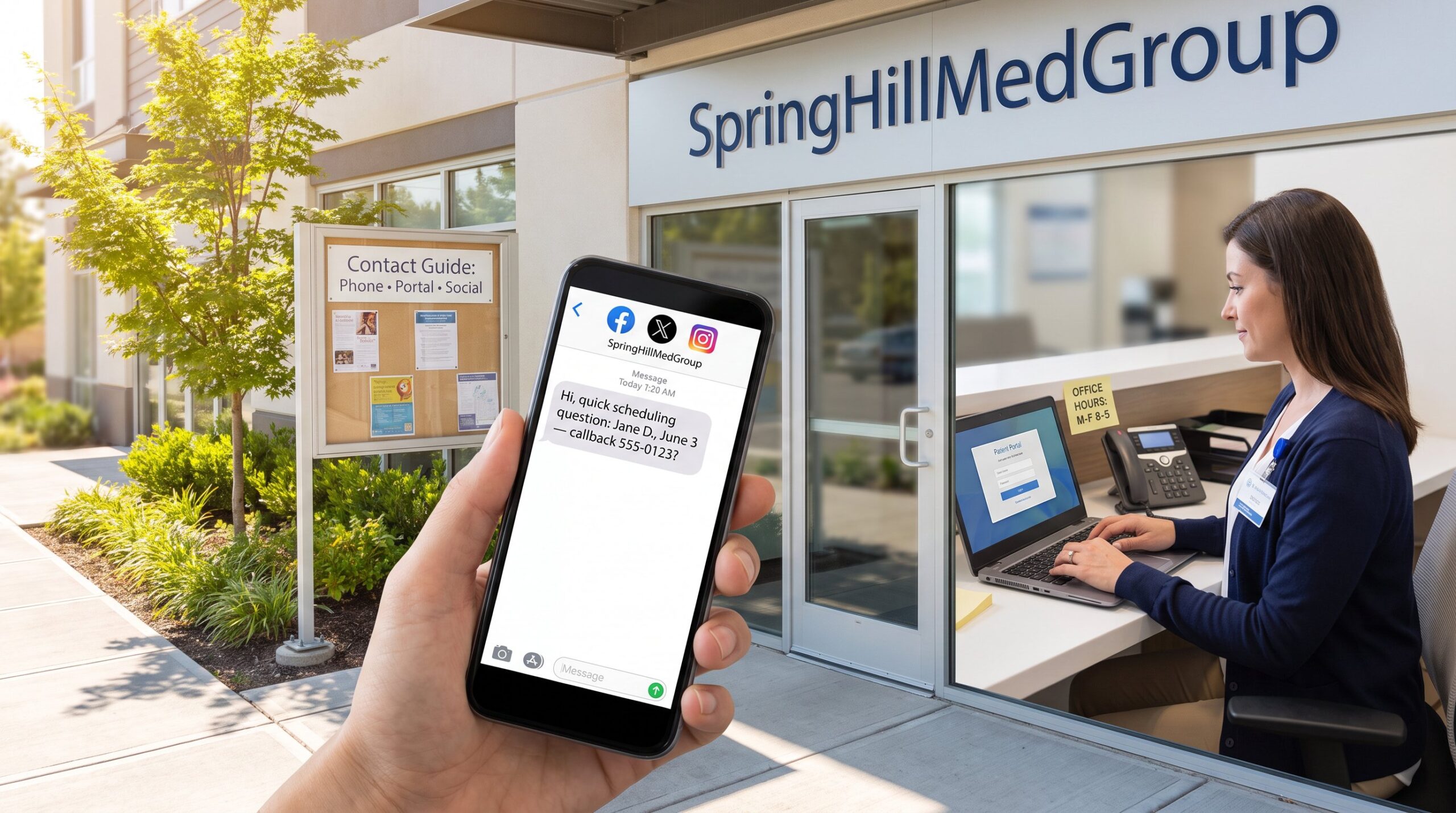
Can you contact SpringHillMedGroup through social media? Yes, SpringHillMedGroup maintains public channels for updates and general questions, but social platforms are not the primary route for patient care. This guide supports choosing a contact method for an editorial matter by explaining what to expect, where to find official accounts, how to message effectively, and when to switch to phone or a secure portal.
Key Takeaways
- You can contact SpringHillMedGroup through social media for general, non-urgent inquiries and community updates but not for medical advice or private health information.
- SpringHillMedGroup has official accounts on Facebook, Twitter/X, and Instagram; verify them by matching contact details with the practice’s official website.
- For efficient communication on social media, send concise messages including your name, brief reason for contact, and a secure callback method.
- Response times on social media are slower and less formal than phone or patient portal; clinical or sensitive matters are redirected to secure channels.
- Never share protected health information on social media; use the patient portal or phone for private medical details, billing, or urgent care needs.
- Social media is useful for quick pointers and community engagement but calling or using the secure portal ensures privacy and faster, documented resolution.
Is Social Media A Valid Way To Reach SpringHillMedGroup? What To Expect
Yes. Social media is a valid way to reach SpringHillMedGroup for non-urgent, general inquiries and community updates. It is not the recommended channel for medical advice, private health details, or urgent needs. Expect slower, less formal responses on public platforms: the group typically directs clinical or sensitive matters to phone, email, or the patient portal.
Social posts and direct messages are public or semi-public. A caller once described posting about an appointment issue and getting a generic reply asking them to call the office: that reply arrived two business days later. Reported response windows for structured channels are usually 24 to 48 hours. Social replies can take longer, so the site’s unpublished response schedule limits firm expectations.
Practical warning: never post protected health information. If someone needs to send medical history, billing numbers, or test results, they should use the secure patient portal or call the office immediately. For scheduling, billing, and records requests, the website lists direct contact options that provide formal tracking and faster resolution.
Which Social Platforms Does SpringHillMedGroup Use — And How To Find Their Official Accounts
Fact: SpringHillMedGroup appears on Facebook, Twitter/X, and Instagram for updates, tips, and event information. The site references those platforms but does not publish verified account links in visible search snippets. To find official accounts, check the practice’s contact pages and matching profile details (logo, location, and consistent naming).
How to verify an account: look for handles that match the practice brand, consistent bios, clinic phone numbers, and links back to the main site. If an account’s bio lists the same phone numbers found on the official contact page, it’s likely legitimate. For phone numbers and official contact details, SpringHillMedGroup’s contact pages help confirm authenticity: the main contact overview explains how to reach them online and by phone via the site’s contact guide.
Examples and links: the practice’s contact guidance and phone listings give quick cross-checks. Users can compare profile details against the site’s service pages and review listings to avoid impersonators. The site also publishes a broader provider and services guide that helps match social profiles to real locations.
How To Message Effectively: Response Times, What To Include, And Etiquette
Direct fact: concise, clear messages get better outcomes on social platforms. For non-sensitive inquiries, begin with name, short reason for contact, and a secure callback method. Typical useful template: “First name, brief issue, best callback number, OK to call between X–Y.”
What to include and why: include exact appointment dates, provider names, and a phone or portal username for follow-up. Example: “Jane Doe, question about lab scheduling on June 3, call 555‑0123 or message portal ID J.Doe92.” This saves time and reduces back-and-forth.
Expected response times: social messages may take multiple business days. By contrast, email or portal messages often arrive within 24–48 hours. If the matter is administrative (billing, appointment times), social can be useful for a quick pointer. If it is clinical, they will ask the person to use a secure channel: social replies usually include that redirection.
Tone and etiquette: keep messages professional and brief. Don’t demand diagnoses or share medical documents in DMs. If the message triggers a booking or billing action, the social team will often supply a direct phone number or a link to the appropriate contact form so the request can be processed properly.
Privacy, Security, And When To Switch To Phone Or Secure Portals
Core insight: social channels are public and insecure for health data. SpringHillMedGroup and similar providers explicitly advise using phone or the patient portal for any protected health information and urgent care needs.
When to switch immediately: if symptoms worsen, if there is risk of harm, or if the issue involves test results or diagnoses, call the clinic or emergency services. For routine private questions, billing disputes, medication lists, or medical records requests, use the patient portal or the contact form listed on the site for auditable, encrypted communication.
Security practices and examples: one patient reported a social media reply asking them to submit insurance documents: staff redirected them to the portal and provided a secure file upload link. That redirection protects privacy and creates a documented request trail. For phone numbers and official contact alternatives, the site’s pages list direct numbers and contact forms to use for secure exchanges.
Useful links: the practice’s consolidated contact guide and phone number pages help people find the right secure channel for records, billing, and scheduling.
Conclusion: When Social Media Helps — And When To Use Other Channels
Social media helps with community updates, non-urgent questions, and event information. It does not replace phone lines, email, or the patient portal for clinical care, urgent concerns, or private records. When in doubt, call the office or use the secure portal listed on the site to protect privacy and speed resolution. For editorial matters, the complete guide to SpringHillMedGroup website enquiries compares the site’s other contact routes.
About the Author