SpringHillMedGroup Contact Hours Explained appears first: this guide defines what contact hours mean at SpringHillMedGroup and shows how patients and staff track and use them in 2026. The article opens with clear definitions, real examples of schedules, and practical steps for submitting requests through the patient portal. It aims to remove confusion about when services are handled, how responses are documented, and which actions count as a contact during business and after‑hours.
Key Takeaways
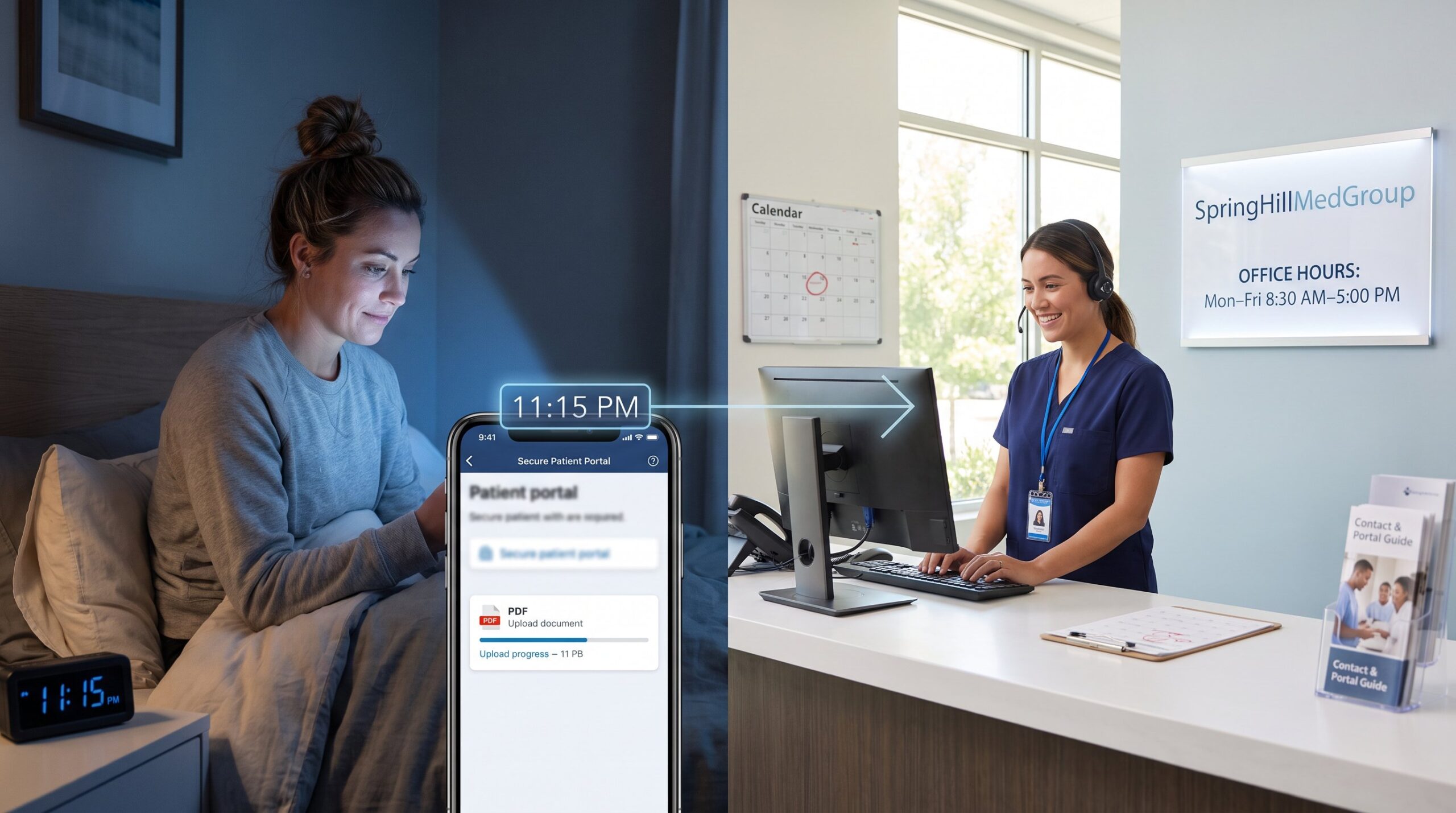
- Contact hours at SpringHillMedGroup define when patients can reach live staff by phone or in-person, typically Monday through Friday, 8:30 AM to 5:00 PM, with 24/7 portal access for non-urgent requests.
- Patients and staff should track contact hours carefully to ensure timely communication, avoid delays, and follow proper protocols during business and after-hours.
- Contact activities include in-person visits, phone calls, secure portal messages handled during staffed hours, telehealth, and administrative emails, all documented for accurate records.
- To earn contact hours, patients use services which create logged encounters; portal messages document requests but responses occur during business hours.
- Patients must set up a portal account to submit requests, upload required documents, and receive confirmations, with most responses within 24–48 business hours.
- Avoid common mistakes like contacting outside posted hours or using the portal for emergencies; always confirm current hours and use phone lines or emergency care when urgent.
What Are Contact Hours At SpringHillMedGroup?
Fact: Contact hours at SpringHillMedGroup are the documented windows when patients can reach live staff or expect administrative responses. SpringHillMedGroup lists clinic operating times, such as standard weekday hours, alongside 24/7 portal access for non‑urgent tasks.
Context and detail: In practice, contact hours split into three clear buckets. First, in‑person and phone access during posted clinic hours (for many locations this is a weekday block, for example Monday–Friday roughly 8:30 AM–5:00 PM). Second, administrative availability for email and secure messages, with typical staff turnaround of 24–48 business hours. Third, continuous patient portal access that permits message submission and record viewing any hour, though responses come during business hours.
Concrete example: a patient who messages the portal at 11:15 PM can upload records immediately: staff review and reply the next business morning (often within 24 hours). That separation, instant access vs. staffed response, matters for expectations and safe triage.
For exact local hours and holiday schedules, patients should consult the group’s contact pages and service listings rather than assume uniform times. Those clinic schedules do not establish whether the target website has a confirmed contact address.
Who Needs To Track Contact Hours And Why It Matters
Fact: Patients, front‑line staff, and compliance teams all need to track contact hours for safety, scheduling, and operational clarity.
Why patients track them: A patient trying to book an urgent appointment or request records benefits from knowing when phone lines are staffed. For example, a caregiver who calls at 7:10 PM may reach voicemail and wait until the next morning: tracking hours avoids that delay. The site’s patient guides and booking pages consolidate this information for convenience.
Why staff track them: Scheduling teams monitor contact windows to assign call‑backs and triage tasks. A receptionist who misreads hours can leave a backlog of 42 messages: accurate tracking keeps callbacks within the 24–48 hour target.
Why compliance tracks them: Operations staff record staffed coverage to meet safety policies and after‑hours contingency plans. If an urgent situation arrives after hours, protocols require directing patients to emergency services, a distinction the team records and audits.
Links and resources: The site’s practical pages on contacting the group and service reviews describe these roles and expectations in actionable terms, helping each group coordinate effectively: contact spring, services booking.
How Contact Hours Are Calculated And Documented
Contact hours are defined in published schedules and recorded across website listings, practice handouts, and internal schedules. A posted schedule does not resolve the lack of verified SpringHillMedGroup phone support.
Calculation method: The simplest unit is a posted schedule line such as “Monday–Friday, 8:30 AM–5:00 PM.” Those lines convert directly into staffed hours. If a clinic lists four providers each working 8 hours, the practice documents both the provider hours and the front‑desk staffed window separately.
Documentation channels: Public contact pages show official hours and location details: patient handbooks and intake forms list scheduling rules: internal systems capture payroll and shift data for verification. For example, the group’s location and contact pages gather hours by site so patients can confirm before traveling.
Verification example: When a patient disputes whether a call occurred during staffed time, staff can cross-reference the website hours and portal message timestamp to resolve the issue. External directory profiles also often mirror these entries and can provide corroborating timestamps. For website-related questions, a complete overview of SpringHillMedGroup website enquiries covers enquiry types, corrections, verification, privacy, available routes, and their limits.
Supporting links: Patients looking for exact contact details or phone guidance will find them on the group’s contact and provider pages and on fast‑reach guides: spring hillmedgroup contact, how to reach phone numbers.
Types Of Activities That Qualify For Contact Hours
Fact: Qualifying contact activities include in‑person visits, phone calls during posted hours, secure portal messages (handled during business hours), telehealth visits, and administrative email inquiries.
Examples and specifics: A 15‑minute follow‑up phone call scheduled at 10:00 AM counts as a contact within staffed hours. A telehealth visit that starts at 4:45 PM and ends at 5:10 PM may span staffed time and brief after‑hours, documentation will show the start time as the contact timestamp. Portal messages sent at 2:07 AM still qualify as contacts because they enter the system and receive staff attention during business hours.
Edge cases and warnings: Walk‑ins outside posted hours typically do not count as a staffed contact and may be turned away: patients who attempt urgent care via portal messages risk delayed response and must be instructed to call emergency services when needed.
Where to confirm: Service and provider pages list what each visit type entails and how booking works, so patients can pick the right channel: services, care, services providers.
How To Earn, Submit, And Get Your Contact Hours Approved
Fact: There is no formal “approval” workflow like continuing education credits: approval here simply means the practice confirms an appointment or completes an administrative request.
How patients earn documented contact: A completed visit, a logged phone appointment, or a closed portal message creates a recorded contact event. For example, a completed telehealth appointment shows a visit note and billing entry that together serve as proof of the contact.
Submission expectations: Patients do not ‘submit’ hours: they create contacts by using services. Staff submit internal logs and appointment records to payroll or operations as needed. If a patient needs a letter proving an encounter, they request records through the portal and the release is documented.
Real‑world caveat: A patient once assumed portal message timestamps equaled immediate clinical review: that misunderstanding caused missed follow‑up. The lesson: a secured message documents the request, but staff response still follows business processing times.
Helpful links: For patient guidance on booking and the available services, the site’s booking and review pages outline how appointments and records are handled: services booking, services providers.
Step-By-Step Submission Process — Portal, Deadlines, And Required Evidence
Fact: For patients, the submission process is: create portal account, submit request or appointment, upload ID/insurance if required, then await staff response during business hours.
Step 1, Account setup: A patient creates a portal profile with basic demographics and verifies identity. That step is mandatory to book appointments online.
Step 2, Submit request: The patient schedules visits or sends secure messages. Non‑urgent messages receive replies within 24–48 business hours: telehealth or appointment bookings confirm available slots in near real time.
Step 3, Evidence and records: For formal proof of an encounter (for work or school), patients request an official visit summary or release of records from medical records. The request shows as a logged transaction and typically requires ID and insurance verification.
Deadlines and notes: There are no public “deadlines” like continuing education: instead, timelines are operational, expect portal responses within two business days and appointment confirmations immediate for booked slots. If quick resolution is needed, calling during posted phone hours speeds action.
Support resources: The site’s contact guide and fast‑reach phone pages show how to access phone lines and portal help, which speeds the submission and verification process: how to reach phone number, contact spring.
Common Mistakes, Compliance Tips, And Verification Best Practices
Fact: The most common mistakes are contacting the practice outside posted hours, using the portal for emergencies, and assuming immediate clinical review of messages.
Common mistakes and their effects: Patients calling at 9:30 PM reach voicemail and may wait 36 hours for callbacks during busy weeks. Another frequent error: using the portal to report chest pain, this delays life‑saving care. These mistakes have clear, preventable consequences.
Compliance tips: Always confirm current hours before traveling: check for holiday closures published on contact pages. Use the portal for routine requests and calls for urgent issues. For documentation, download visit summaries soon after appointments, those files carry timestamps that verify attendance.
Verification best practices: Keep screenshots of appointment confirmations and portal message receipts. Staff should log call disposition codes and attach message threads to visit notes. For external corroboration when needed, directory listings can be used to cross‑check location hours and addresses. One such provider listing gives public hours and contact details to confirm local practice times.doctor profile
Vulnerable moment and lesson: A staffer once failed to update weekend clinic hours after a staffing change: three patients arrived unexpectedly. The fix was simple but human: post immediate schedule updates online and set an email alert to notify patients who had appointments that day.
Final practical warning: Never substitute secure messaging for emergency care. If a condition is urgent, call the main phone number during staffed hours or head to the nearest emergency department.
About the Author