You likely notice dental implants feel more predictable and less invasive than a few years ago. For those exploring dental implants in Raleigh, NC, advances in implant materials, digital planning, and minimally invasive techniques now make it possible to get stronger, longer-lasting results with fewer appointments and faster healing.
This article will show how new materials and surgical methods improve outcomes, how digital tools streamline planning and placement, and what that means for your comfort, cost, and long-term oral health. Stay focused on practical changes that affect your treatment choices and recovery.
Advancements in Dental Implant Materials
You will read about material changes that improve implant integration, aesthetics, and long-term stability. Expect specifics on newer biocompatible alloys and ceramics, direct comparisons between zirconia and titanium, and engineered surface treatments that speed osseointegration.
Biocompatible Materials Enhancements
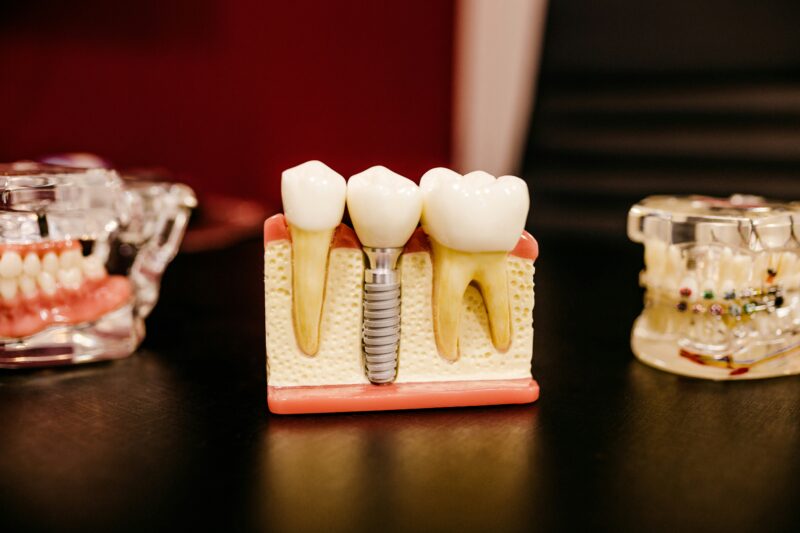
Manufacturers improved alloy composition and processing to reduce corrosion and ion release. Modern titanium alloys (e.g., Ti-6Al-4V ELI variants and cold-worked commercially pure titanium) offer higher fatigue resistance while preserving biocompatibility you rely on for long-term function.
Surface-passivation and anodization methods further lower metal ion exposure and encourage a stable bone response. Those treatments matter if you have metal sensitivities or systemic conditions that may react to corrosion products.
Polymer and composite coatings now deliver localized drug release and antimicrobial action. Examples include antibiotic-loaded hydrogels and silver-doped polymers applied to abutments to lower early infection risk.
You should consider these options when treating patients with compromised healing, because they can reduce early failure rates without changing the implant macro-design.
Zirconia vs. Titanium Implants
Zirconia offers tooth-colored esthetics and low plaque affinity; it suits thin-gum biotypes and patients requesting metal-free options. Modern yttria-stabilized tetragonal zirconia polycrystal (Y-TZP) implants have improved fracture toughness versus older ceramics, but you must still assess occlusal load and implant diameter to avoid mechanical failure.
Titanium remains the clinical standard for predictable osseointegration and long-term data. Its ductility and proven fatigue life make it preferable in posterior regions and high-load situations.
Compare key properties:
- Biocompatibility: Both perform well; titanium has longer-term evidence.
- Esthetics: Zirconia superior in visible zones.
- Mechanical strength: Titanium more forgiving under cyclic loads. Choose based on site, esthetic demand, parafunction risk, and patient preference.
Surface Technology Innovations
Surface engineering shifted from purely roughened textures to multifunctional coatings that actively modulate healing. You will encounter two main approaches: micro/nano-topography and bioactive coatings. Micro-roughness created by sandblasting plus acid etching increases initial bone contact. Nano-scale features—produced by laser texturing or anodic oxidation—enhance protein adsorption and cell signaling, speeding osseointegration in the first weeks after placement.
Bioactive coatings release calcium phosphate, BMP-mimetics, or antimicrobial agents. Calcium phosphate layers (e.g., plasma-sprayed or biomimetic apatite) create a chemically favorable interface for bone bonding. Antimicrobial surfaces use silver, copper, or quaternary ammonium compounds to lower peri-implantitis risk while preserving osteoblast activity.
Practical considerations for your cases:
- Evaluate evidence for coating durability under functional loading.
- Match surface type to clinical goals: rapid integration for immediate loading, antimicrobial coatings for high-infection-risk patients.
Modern Implant Procedures and Techniques
You will encounter less invasive surgeries, digital planning and guides, and options that let you receive temporary crowns immediately. These changes shorten treatment time, improve precision, and reduce recovery discomfort.
Minimally Invasive Surgical Approaches
Minimally invasive techniques reduce soft-tissue trauma and blood loss by using smaller incisions or flapless approaches. You may have implants placed through a punch or small incision guided by precise imaging, which preserves gingival architecture and speeds healing.
Local anesthesia plus sedation protocols let you remain comfortable without general anesthesia in most cases. Smaller wounds lower infection risk and often produce less postoperative pain and swelling, so you can return to normal activities sooner.
Not every case suits a flapless approach. You need adequate bone volume and favorable anatomy; otherwise, open-flap access or grafting remains necessary. Your clinician will assess CBCT images and clinical findings to choose the safest technique.
Guided Implant Surgery
Guided surgery uses digital workflows: intraoral scans, cone-beam CT (CBCT), and planning software create a virtual prosthetic-driven plan. You can review implant position, angulation, and depth before the procedure, improving restorative outcomes.
Surgical guides—printed or milled—translate the plan to the mouth, controlling drill sequence and implant placement. This increases placement accuracy and reduces chair time, especially for multiple adjacent implants or complex cases.
Guided workflows also improve communication between you, the surgeon, and the lab. Expect fewer surprises at prosthetic delivery and a higher likelihood that the final crown will fit the planned emergence profile and occlusion.
Immediate Load Implants
Immediate load protocols let you receive a provisional crown or bridge on the same day as implant placement when primary stability is sufficient. You benefit from restored function and esthetics without waiting months for osseointegration.
Clinicians measure insertion torque and implant stability quotient (ISQ) to decide if immediate loading is safe. Typically, torque values above a defined threshold (often >30–35 Ncm) or ISQ readings that indicate stability support loading.
Immediate loading carries stricter case selection: good bone quality, minimal parafunction, and controlled occlusion are essential. When executed properly, you get faster provisionalization with comparable long-term outcomes to traditional delayed loading.
Digital Integration in Implant Dentistry
Digital tools now shape diagnosis, surgical execution, and prosthetic delivery. You gain precise 3D anatomy, faster prosthesis manufacturing, and data-driven decision support that together reduce chair time and improve predictability.
3D Imaging and Planning
Cone-beam CT (CBCT) has become central to implant planning. You can evaluate bone volume, nerve location, and sinus anatomy in three dimensions, which lets you choose implant size and angulation with clinical confidence.
Virtual treatment planning software lets you merge CBCT with intraoral scans and facial photos. This fusion supports surgical guides and esthetic previewing so you can plan single implants, full-arch cases, or augmentations with quantifiable measurements.
Surgical guides produced from the plan translate virtually determined implant positions to the patient. Guided surgery reduces placement variability, helps you avoid critical anatomy, and supports flapless approaches that shorten healing.
CAD/CAM Fabrication
Digital impressions from intraoral scanners replace alginate and PVS in many workflows. You capture accurate surface geometry and deliver files to milling or 3D-printing centers without shipping stone models.
CAD software lets you design abutments, crowns, and full-arch prostheses tailored to implant angulation and emergence profile. You control material choice—zirconia, titanium, or PMMA—and occlusal schemes to match functional demands.
On-site milling or in-office 3D printing speeds turnaround. You can provisionally restore same day in some cases, and lab partnerships using digital files minimize remakes and reduce fit issues that arise from analog transfers.
Artificial Intelligence in Implantology
AI assists in image interpretation, automated landmark detection, and treatment suggestions based on large case datasets. You see implant site assessments and nerve mapping proposals that speed planning and highlight areas needing clinician review.
Predictive models estimate risk factors such as implant failure probability or need for grafting by analyzing bone density, medical history, and occlusion patterns. Use these outputs as decision aids rather than definitive answers.
AI also optimizes lab workflows by suggesting prosthetic designs and detecting scan defects before manufacturing. That reduces remakes and saves time, but you retain final clinical judgment for safety and esthetics.
Patient Outcomes and Future Directions
Dental implants now deliver higher predictability, faster healing, and more tailored prosthetics. Expect improved long-term function, fewer complications, and wider availability driven by digital workflows and new materials.
Longevity and Success Rates
Modern implants commonly show 10‑ to 20‑year survival rates above 90% in controlled studies when placed and maintained properly. Surface treatments (microrough, bioactive coatings) and alloy improvements have reduced early failures by enhancing osseointegration.
Your systemic health and oral hygiene remain major determinants of success. Smoking, uncontrolled diabetes, and poor periodontal status still raise failure risk, so preoperative optimization and maintenance visits matter. Clinicians increasingly track survival and complication data with registries, improving real‑world evidence and allowing you to make informed choices about implant type and timing.
Personalization in Treatment
You now benefit from patient-specific planning driven by CBCT, intraoral scanning, and CAD/CAM prosthetics. Guided surgery templates and digital design let clinicians place implants with millimeter precision and deliver crowns or bridges that match occlusion and esthetics more predictably.
Material choices have expanded: zirconia abutments for esthetic zones, titanium‑zirconium for narrow sites, and customized screw‑retained prostheses reduce retrieval complications. Digital workflows shorten chair time and enable same‑day provisionalization in many cases, improving comfort and function during healing.
Global Trends in Access and Adoption
Costs have declined in some markets as more providers adopt streamlined digital workflows and implant training becomes widespread. That drives increased availability outside tertiary centers and raises competition, often lowering patient prices.
However, access remains unequal. Low‑resource regions still face supply, training, and regulatory barriers. Public health initiatives and telementoring programs are starting to close gaps by enabling local clinicians to perform simpler implant procedures and refer complex cases, expanding practical access while maintaining safety.
About the Author