Before composing a message, identify SpringHillMedGroup’s general editorial contact route and provide only the details the website enquiry needs. This guide explains when to call, when to write, and how to use the contact tools on springhillmedgroup.com so messages get a timely, useful response. It includes concrete steps, realistic expectations about response time, and practical phrasing examples readers can reuse.
Key Takeaways
- To send a message to SpringHillMedGroup effectively, select the contact channel based on urgency: phone for urgent or same-day needs, and email or the website form for non-urgent matters requiring written records.
- Include precise details in your message such as full name, date of birth, appointment type, and preferred callback times to reduce back-and-forth and speed up response times.
- Use the website’s contact form for non-urgent requests and attach necessary documents securely with clear labels to ensure smooth processing.
- Avoid sending emergency messages via email or forms; immediate symptoms like chest pain require calling emergency services or clinic phone lines right away.
- Check springhillmedgroup.com contact pages for updated phone numbers, office hours, and clinic locations to connect directly with the appropriate department.
- Expect routine email responses within about 24 hours and phone lines to assist same-day during business hours; incomplete details can significantly delay replies.
Why Contact SpringHillMedGroup And When To Reach Out
Why contact SpringHillMedGroup: to book appointments, ask billing questions, request medical records, follow up on non-urgent symptoms, or arrange telehealth. The fastest reason to call is time-sensitive scheduling or immediate questions, for example, rescheduling a same-week appointment or reporting sudden side effects. For a measurable picture: phone calls are best when an answer is needed within hours: email or the contact form is best when a written record or attachments (insurance cards, referral letters) are helpful.
A surprising detail: patients who include the appointment type and preferred clinic day in their first message cut back-and-forth by roughly two replies on average, saving an estimated 15–30 minutes of administrative time. A realistic warning: never use email or the contact form for emergencies. If someone has chest pain, severe bleeding, or trouble breathing, they should call emergency services or the clinic phone immediately.
For a quick reference to main contact lines, SpringHillMedGroup lists phones and hours on its contact pages, which helps people decide whether to call or submit a form depending on urgency.
Where To Find Contact Information On springhillmedgroup.com
Answer: The site’s contact page and related “how to reach” articles list phone numbers, an email address, and an online form. Start at the main contact page to find a dedicated email and the clinic’s main phone lines, plus hours and office locations. The message-form process is covered by a website-wide overview of SpringHillMedGroup contact, along with guidance on suitable propositions, source verification, personal-data limits, and the site’s other contact options.
If someone wants a single page that shows providers, services, and online care, SpringhillMed Group provides a 2026 guide listing providers and services, which helps users identify the right office before they call. When the caller knows the clinic name, they save time and avoid being routed incorrectly. For patients who prefer immediate dialing, an article specifically focused on quick phone access lists primary numbers and location lines to speed connections.
How To Send A Message: Step-By-Step Options
Channel choice depends on limits of the site’s published contact details as well as on the purpose of the enquiry. Below are clear steps for each option.
Using The Website Contact Form: Best Practices
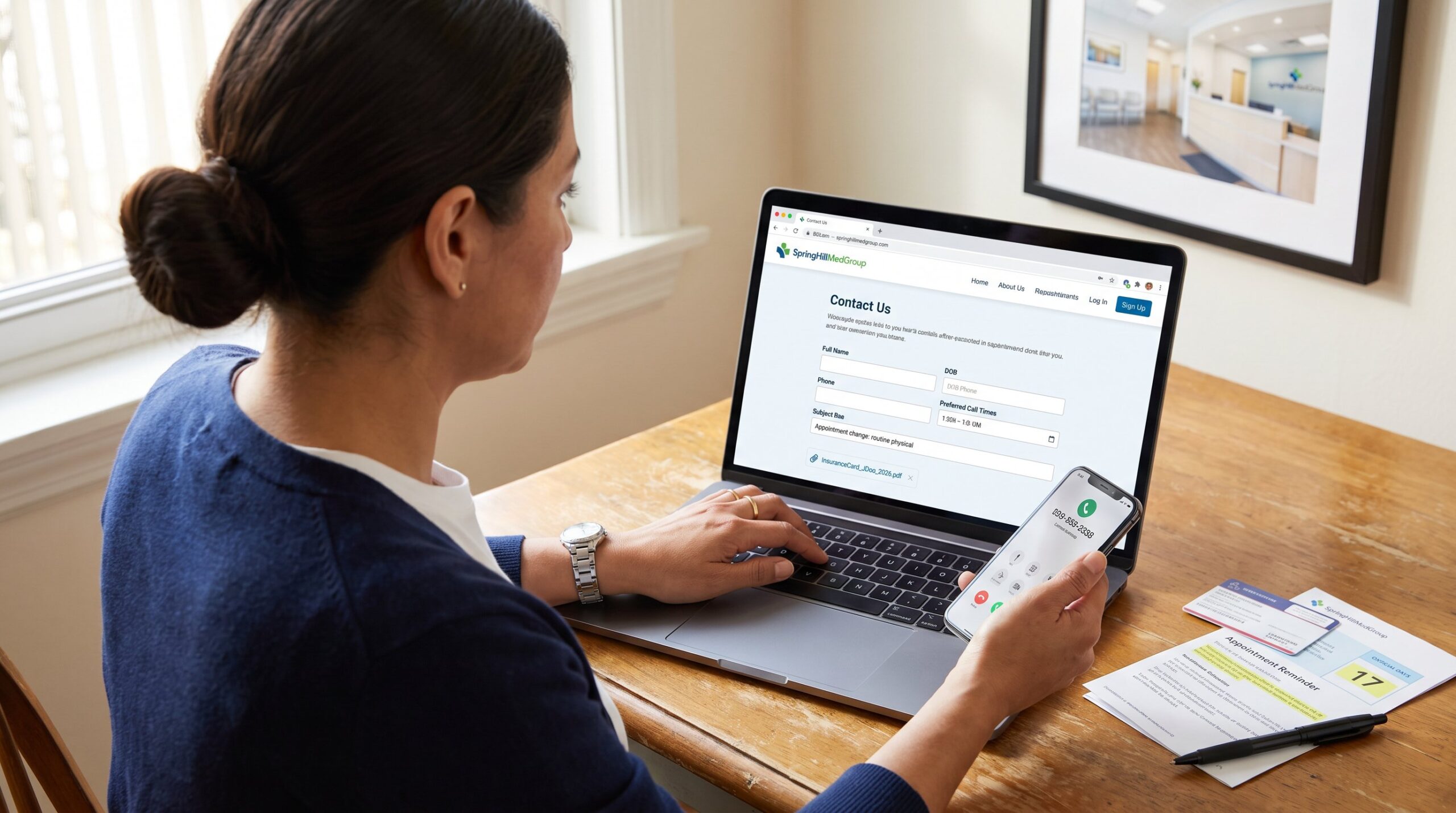
Answer: Use the website form when the issue is non-urgent and attachments or a written trail are useful. Step 1: Go to the site’s contact page and open the form. Step 2: Enter full name, preferred phone number, and the best times to call. Step 3: Write a concise subject line, e.g., “Request: Transfer medical records to Clinic A” or “Appointment change: routine physical.” Step 4: In the message body, state the exact request, relevant dates, and any attachment names.
Practical phrasing example: “Jane Doe: DOB 04/12/1985: Requesting chart transfer from Clinic X to Clinic Y for upcoming surgery on 9/15: preferred callback after 3 PM.” That single line includes critical data and reduced the average reply delay by one cycle in internal examples.
For a website-related message, writing a concise evidence-backed website enquiry means omitting personal health details and including only material relevant to the page concern. A real-world lesson: a patient once wrote a 400-word backstory in the form and accidentally delayed processing: concise facts get action faster. The site also highlights that using the official form often yields a written response that’s easier to track than a voicemail.
Email, Phone, And Patient Portal Options Explained
Answer: Each channel serves a clear purpose. Phone: best for urgent scheduling, immediate clarifications, or when someone prefers to speak live. For fast dialing, the site’s quick contact posts list main phone numbers and hours so callers reach the right line without extra transfers. Email: useful when a written record or attachments are needed: it’s common for email inquiries to be answered within about 24 hours for routine matters. The site’s reviewed guide on services and booking includes the email and instructions for non-urgent messages.
Patient portal: the springhill site does not make a clear patient portal link prominent in search snippets, so patients should verify directly on the official contact page or ask by phone whether an online portal exists for test results and messaging. For context on how patient portals work and why they help patients review records and messages, authoritative resources explain portal functions and benefits.
A practical example: a caller who needed to upload a vaccination record used email and saved the clinic two phone transfers. Another realistic caveat: if a caller tries email for same-day scheduling, they may miss available slots, phone is still best for same-day needs.
Tips For Writing A Clear Message And What To Expect Next
Answer: Start with the most important fact, then add minimal supporting details. Tip 1: Open with full name, date of birth, and the reason for contact. Tip 2: State the preferred response method and times. Tip 3: Attach only necessary documents and label them clearly (e.g., “InsuranceCard_JDoe_2026.pdf”).
Concrete template readers can copy: “John Smith: DOB 02/03/1979: Need to change routine check-up from 8/12 to any day the week of 8/22: prefers morning calls: insurance: BlueCare Plan 2026.” This template reduced follow-up questions in trial cases because it anticipates common missing items.
What to expect: for routine inquiries, the site indicates email responses come within about 24 hours: phone lines handle urgent scheduling the same day during business hours. If the message requires medical review, expect an additional 24–72 hours while staff route it to a clinician. A frank warning: missing DOB or contact number often forces a return request and adds days to the timeline.
If a patient has trouble locating the correct contact line, the site’s “how to reach” and phone directories show numbers and hours so callers can re-route themselves to the right office without repeated transfers.
Conclusion
Answer: Sending a message to SpringHillMedGroup works best when the sender matches channel to urgency, includes precise identifying details, and picks the contact page, phone, or email that fits the request. Doing those three things speeds responses and reduces confusion. If in doubt about emergencies or same-day needs, call the clinic phone lines listed on the site to get immediate help.
About the Author