Achieving youthful skin often feels like navigating an endless maze of clinical options. When deep lines and sagging begin to betray our age, topical creams frequently fall short. Modern dermatology relies on cellular regeneration to reverse time from the inside out. Two powerhouse procedures currently dominate this arena by triggering the skin’s natural healing cascade. Understanding how these advanced technologies operate empowers patients to choose the ideal pathway for their specific aging concerns.
Before committing to any professional intervention, individuals must evaluate the core mechanics of each procedure as part of a comprehensive wrinkle reduction treatment. Both methods share the ultimate objective of stimulating collagen and elastin synthesis, yet their approaches differ significantly. One harnesses the precision of focused light energy, while the other delivers thermal energy deep beneath the skin via microscopic needles. Grasping these foundational differences prevents wasted investments and ensures maximum rejuvenation with minimal downtime.
Decoding Laser Resurfacing Mechanics
Laser resurfacing represents the gold standard for obliterating surface level imperfections, sun damage, and stubborn fine lines. This technology projects concentrated beams of light energy that vaporize damaged micro layers of the epidermis. As the old skin sheds, the body rushes fresh, unblemished tissue to the surface. Fractional lasers create thousands of microscopic treatment zones, leaving surrounding tissue intact to accelerate healing.
The physiological response triggers an aggressive wave of fibroblast activity. Fibroblasts are the cellular engines responsible for manufacturing structural proteins. Over subsequent weeks, the skin tightens and evens out dramatically. Patients typically notice remarkable improvements in hyperpigmentation, rough texture, and superficial crepiness. Recovery varies depending on whether the laser is ablative or non-ablative, but the resulting radiance proves remarkably transformative for weathered complexions.
Unlocking Deep Cellular Repair Through Radiofrequency
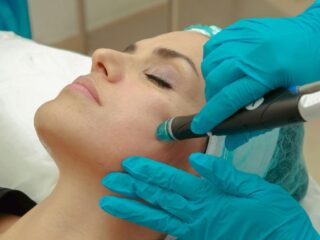
Radiofrequency microneedling takes a completely different route by bypassing the uppermost layer of the epidermis entirely. Tiny, insulated or non-insulated needles penetrate the dermis at precise depths, delivering high intensity radiofrequency heat directly into the tissue. This thermal energy creates controlled micro wounds that stimulate neocollagenesis deep where structural foundation loss occurs.
Because the surface epidermis remains largely undamaged, healing times are drastically reduced compared to aggressive lasers. This makes radiofrequency microneedling exceptionally safe for individuals with darker skin tones who face higher risks of post inflammatory hyperpigmentation. The treatment excels at tightening loose skin along the jawline, reducing acne scarring, and firming deep creases around the mouth. Cellular renewal happens deep within the reticular dermis, resulting in long-lasting structural reinforcement.
Direct Comparison of Energy Technologies
Selecting between these two modalities requires careful analysis of individual skin anatomy and lifestyle constraints. Laser resurfacing reigns supreme for superficial clarity, sun spots, and textural refinement. Conversely, radiofrequency microneedling dominates when structural tightening and deep volumetric support are the primary goals.
Downtime also heavily influences decision-making. Ablative lasers often require a week or more of strict isolation while the skin weeps and peels. Radiofrequency microneedling typically involves only a couple of days of mild redness resembling a mild sunburn. Combining both technologies in alternating treatment plans allows advanced practitioners to address superficial damage and deep structural laxity simultaneously.
Maximizing Longevity Through Proper Maintenance
Investing in advanced cellular regeneration yields incredible dividends, but results require diligent preservation. Professional procedures ignite the cellular repair process, yet daily habits dictate how long those gains endure. Daily application of broad spectrum ultraviolet protection prevents fresh solar degradation from breaking down newly formed collagen networks.
Incorporating clinical-grade retinoids and antioxidants into daily regimens sustains high cellular turnover rates. Patients must view in-office procedures as a powerful reset button rather than a permanent vaccine against aging. Pairing advanced energy treatments with a disciplined home care strategy guarantees lasting vibrancy and enduring structural integrity.
About the Author