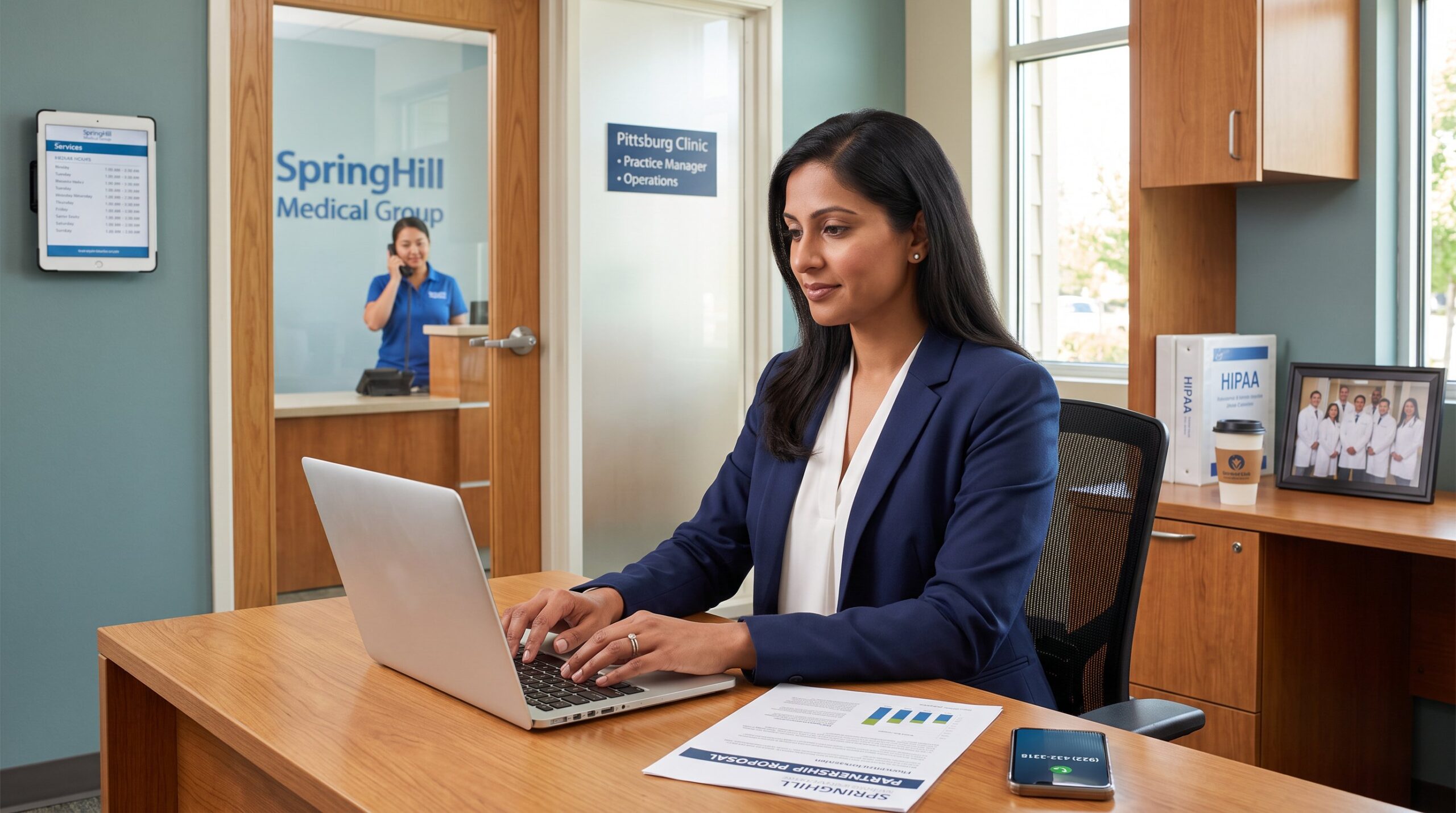
Before submitting a collaboration proposal through the website, review the full scope of SpringHillMedGroup editorial contact, including propositions, verification, correction requests, privacy, and contact limits. A strong partnership message also needs a clear, concise proposal. This guide shows who to reach, when to call or email, how to prepare a proposal that gets read, and a ready-to-send message. It is written for organizations seeking clinical collaborations, technology pilots, community programs, or referral partnerships with SpringHillMedGroup.
Key Takeaways
- Contact SpringHillMedGroup for partnerships using verified emails [email protected] or [email protected] and the main phone line (925) 432-3318 during weekday business hours.
- Craft a concise, data-driven partnership proposal aligning with SpringHillMedGroup’s clinical services, focusing on measurable benefits like reduced no-show rates or improved chronic disease outcomes.
- Address emails to specific titles such as Practice Administrator or Medical Director if no named contact is available, and follow up by phone if no response within 5 business days.
- Include five clear proposal sections: organization overview, collaboration model, expected benefits, implementation plan with metrics, and compliance and risk mitigation.
- Send initial partnership outreach emails early in the week and avoid weekends or holidays to align with clinic administrative schedules, enhancing chances of timely review.
Why Partner With SpringHillMedGroup — Benefits And Fit
Fact: SpringHillMedGroup operates multisite primary and specialty care practices that make practical partners for clinical programs and technology pilots. SpringHillMedGroup’s clinics in Pittsburg and Brentwood provide internal medicine and specialty services, which creates immediate points of alignment for population health programs, diagnostics, and care‑coordination tools.
Context and value: A partner gains access to an established patient panel, clinical workflows, and local referral networks. For example, a remote-monitoring vendor could run a 6‑month pilot focused on uncontrolled hypertension and use clinic staff for enrollment and follow‑up. Concrete benefits to highlight: projected reductions in no‑show rates, faster referral turnaround, or improved chronic disease metrics.
Fit examples: Ideal collaborators include digital health developers, diagnostic labs, care‑management firms, community health organizations, and payers testing value‑based models. To demonstrate fit, cite specific services the group lists on its site and show how the partner’s deliverable maps to those services. For organizational context and staff orientation, reference the springhillmedgroup team to show familiarity with their leadership and structure: the springhillmedgroup team page outlines clinical champions and can guide which departments to target.
Who To Contact And When To Reach Out
Answer: Use the main administrative emails and the primary phone line during weekday business hours for an initial outreach. Verified contacts include [email protected] and [email protected] for inquiries, and the main practice phone number (925) 432‑3318 for immediate routing to practice managers.
Evidence and timing: Public practice listings show the Pittsburg location phone and address, which match administrative points of contact: a provider profile page verifies the phone and hours for the Pittsburg office and supports calling during weekday hours. The external practice listing confirms the telephone contact and location details for scheduling and administrative requests: the provider profile on WebMD verifies these practice details (Pittsburg practice profile).
When to call vs. email: Call during Mon–Fri business hours to request the correct administrator or practice manager for partnerships. Email is preferred for partnership proposals because it creates a documented trail and lets recipients route the request. Expect a 24–48 hour weekday response: if the ask is urgent, follow up by phone.
Practical tip: Address emails to a title (Practice Administrator, Director of Operations, or Medical Director) if a named person is unavailable. The site’s general contact pages and service listings can help identify likely titles before outreach, such as the contact springhillmed group resource that lists phone and online contact options.
How To Prepare A Strong Partnership Proposal
Direct answer: A strong proposal shows alignment, measurable value, a short pilot plan, and clear resource asks. First distinguish a collaboration from contacting the website about advertising, then use a one‑page executive summary that states the problem, proposed solution, and specific benefit to SpringHillMedGroup.
What to research first: Confirm clinic services, locations, and leadership so the proposal names real people and programs. Use site pages that describe services and providers to customize language. For example, reference the group’s services and online care options in your proposal to show you know their operations: the services and providers guide helps with accurate descriptions.
Quantify the opportunity: Replace vague promises with numbers, projected patient reach, estimated reduction in hospital readmissions, cost per avoided visit, or time saved for nurses. A pilot should be 3–6 months with clear success metrics (e.g., 15% reduction in no‑show rates or 30% improvement in medication adherence among enrolled patients).
Operational clarity: Include staffing needs, data integrations, and a simple timeline with milestones. If the partnership requires EHR access or PHI exchange, state HIPAA compliance and security controls up front. Cite any prior measurable outcomes from similar pilots or the number of patients served in comparable settings.
Key Elements To Include In Your Proposal
Answer: Include five concise sections that make evaluation fast and objective.
-
Organization overview and track record. State relevant metrics, number of patients served, prior clinical partners, or published outcomes. If applicable, cite exact numbers (for instance, “2,847 patients managed in remote monitoring program”). Use the services booking and patient guide to show how your offering could integrate into existing booking and care paths.
-
Define whether this is a pilot, phased rollout, co‑branding, or referral integration. If co-branded materials raise a copyright or content-reuse concern, how to contact SpringHillMedGroup about copyright content explains what evidence to submit. Keep the initial scope tight, one clinic, two clinicians, or one condition.
-
Expected benefits to SpringHillMedGroup. Provide clinical, financial, and reputational gains with estimates (e.g., “estimated $12,000 annual savings from reduced ER redirects”).
-
Implementation plan and metrics. List milestones, owners, data flows, and success criteria (enrollment targets, engagement rates, clinical targets).
-
Compliance and risk mitigation. Summarize HIPAA safeguards, data hosting details, and a basic liability allocation. Attach templates for BAAs or data‑use agreements to speed review.
Practical warning: Don’t bury costs or integration demands. Early transparency about staff time and IT involvement avoids surprises that halt approvals.
How To Contact: Channels, Timing, And A Sample Email
Fact: Email is the preferred channel for partnership outreach: phone calls are useful to route the request to the right administrator. Use [email protected] or [email protected] for initial outreach and call (925) 432‑3318 to follow up or request the appropriate contact.
Channels and addresses: For formal letters or documents, mail to the clinic offices in Pittsburg or Brentwood. The site lists clinical locations and contact pages that help choose the correct office: review the springhillmedgroup contact page for address details and additional contact methods. If a program relates to scheduling or patient-facing services, reference the site’s contact guide for how patients currently reach the group: the practical contact instructions on the efficient contact page illustrate common workflows.
Timing advice: Send initial emails early in the week and follow up midweek. Avoid holidays and weekend outreach, clinic administrative staff typically process partnership requests on weekdays.
Sample initial email (business tone):
Subject: Partnership Proposal Between [Your Organization] and SpringHill Medical Group
Dear SpringHill Medical Group Leadership Team,
My name is [Name], [Title] at [Organization]. We specialize in [one‑line description]. We propose a 3‑month pilot to [goal, e.g., reduce uncontrolled diabetes visits] at your Pittsburg clinic, serving approximately X patients.
Proposal highlights:
- Pilot scope: [one clinic, X clinicians]
- Expected outcomes: [percentage improvement or numeric target]
- Resource asks: [staff hours, technical connections]
Could you direct this to the appropriate person for partnership discussions and share 2–3 available times for a 20‑minute call in the next two weeks? Thank you for your time.
Sincerely,
[Name] | [Title] | [Phone] | [Email]
Practical follow‑up: If there is no reply within 5 business days, call the main number and request to leave a partnership outreach voicemail for the practice manager. Also, maintain one concise PDF attachment (one page) to avoid clogging inboxes.
Conclusion
Takeaway: Use the verified emails and phone number, craft a data‑driven one‑page proposal, and follow weekday business rhythms. For administrative contact and practical routing, reference the group’s contact pages and team listings before outreach to ensure the message lands with the right decision maker.
About the Author