How to report incorrect information to SpringHillMedGroup starts with providing clear details, documentation, and the correct contact channel. This guide shows what qualifies as incorrect data, exact items to include, sample messages for email and phone, expected follow-up steps, and practical tips to speed resolution. Choose the enquiry type before writing: a correction report needs page evidence, while a partnership proposal to SpringHillMedGroup needs its own proposal brief. This guide explains what evidence to attach and how to track a correction request.
Key Takeaways
- Reporting incorrect information to SpringHillMedGroup requires clear identifiers, precise error descriptions, and supporting documents to ensure accurate record updates.
- Common incorrect information includes wrong names, dates of birth, addresses, insurance details, and appointment times, all of which can impact care and billing.
- Use SpringHillMedGroup’s official contact channels—online forms, email, or phone—with complete and concise information to speed the correction process.
- After submission, the staff verifies identity, reviews the reported errors, updates records if appropriate, and communicates any issues or next steps.
- Keep copies of all communications, note confirmation numbers, and follow up promptly if corrections are delayed to ensure issues are resolved efficiently.
Why Correcting Incorrect Information Matters
Incorrect information can create real-world harm: missed appointments, denied claims, or privacy risks when the wrong phone or address is used. SpringHillMedGroup relies on accurate patient data to schedule care, bill insurers, and share results. A clear fact: correcting a single wrong insurance policy or birthdate can prevent weeks of delays and a costly billing appeal. Readers should treat small errors as urgent. Health systems often coordinate care across departments, so one corrected field, like an updated phone number, can alter patient outreach, lab result delivery, and appointment reminders.
Concrete examples help. If a patient’s phone is listed as 555-0123 instead of 555-0213, the practice may leave a voicemail at the wrong number and the patient can miss a lab follow-up. If an insurer ID is wrong on a bill, payers may deny the claim and the patient faces collections. SpringHillMedGroup has policies and contact paths for corrections: using them reduces administrative back-and-forth and protects access to care.
What Counts As Incorrect Information On SpringHillMedGroup
Answer first: incorrect information includes any data that misidentifies a person, record, or transaction. Typical reportable errors are wrong name, DOB, address, phone, insurance details, appointment dates/times, provider names, emergency contacts, and web content mistakes. SpringHillMedGroup treats both clinical record errors and public website inaccuracies as reportable.
Specific examples: a chart that lists “Jane Doe” with DOB 01/02/1980 when the patient’s birthdate is 02/01/1980: a bill showing the wrong insurance carrier code: a web article with an outdated clinic location. Readers should note where the error appears, patient portal, emailed statement, printed bill, or website page, because that location determines which team handles the correction. If the issue looks like suspicious billing or potential fraud, escalated review may follow. For guidance on correcting medical records generally, reputable sources outline required steps and documentation.
How To Report: What To Include And How To Submit
Start with the answer: include clear identifiers, a precise description of the error, the correct data, and any supporting documents. SpringHillMedGroup needs enough information to verify identity and make the change without repeated requests.
What to include: full name exactly as shown in records, date of birth, preferred contact method, where you saw the error (portal page, bill, email, specific website URL), a short bullet list of each incorrect item with the corrected value, and attachments such as a scanned driver’s license, insurance card, or bill page. If reporting an appointment or billing error, include dates and reference numbers. Keep the message concise and numbered so staff can process each item.
How to submit: use the official contact channels. For general contact details and options, readers can use the site’s consolidated contact guide to choose phone, online, or location-specific help.
Online Submission: Filling Out The Contact Form Correctly
Immediate fact: online forms speed verification when filled correctly. When using SpringHillMedGroup’s contact form, select the category closest to “update information” or “report an error.” Enter identifiers in the required fields exactly as they appear on records. Use the message box to list each error as numbered items and paste corrected values next to each number.
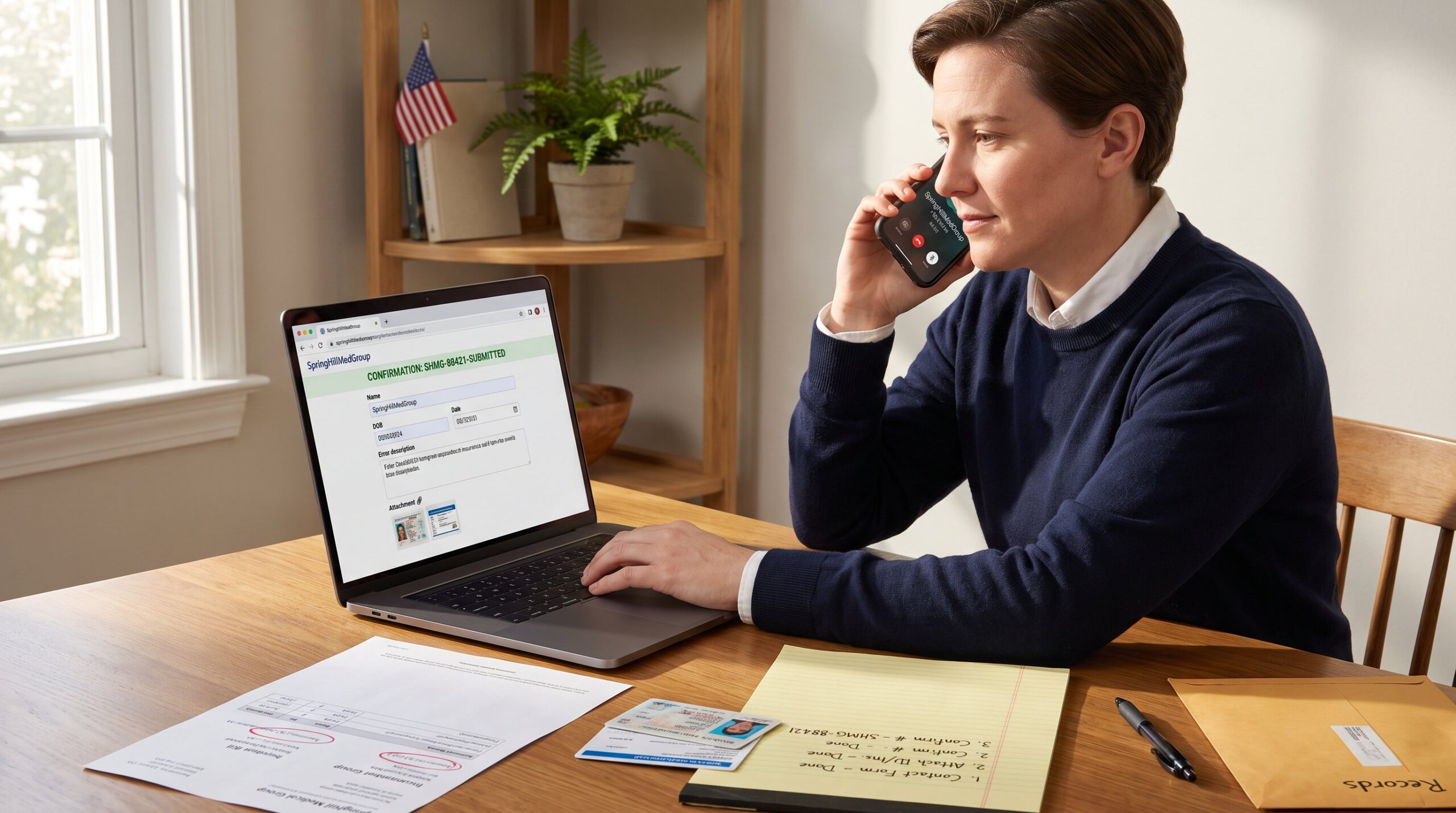
Practical detail: attach files in the form if it allows attachments, ID, insurance card, or a redacted bill. Save a screenshot of the filled form before submitting and record any confirmation number shown. If the form asks for a subject, use a clear subject like “Correction Request: DOB and Insurance (MM/DD/YYYY).” Keeping a copy matters: staff often ask for the same documents: having them ready saves repeated uploads.
For page corrections and other website enquiries, a comprehensive overview of SpringHillMedGroup editorial enquiries covers contact routes, enquiry types, verification, privacy, and channel limitations.
Email And Phone Options: Sample Message And What To Say
Direct answer: email and phone work if the contact form isn’t available or when a person prefers a live conversation. For email, use a brief subject and attach verification documents. For phone, call during off-peak hours and request a confirmation number.
Sample email (concise):
Subject: Correction Request, Name / DOB / Insurance
My name is [Full Name], DOB [MM/DD/YYYY]. I found incorrect information at [where it appears]. Incorrect: [brief list]. Correct: [brief list]. I attached a photo of my driver’s license and insurance card. Please confirm when corrected and provide a reference number.
On the phone: lead with purpose: “I’m calling to correct information in my record.” Provide name, DOB, and any patient or account number they request. Ask for a confirmation or ticket number and note the agent’s name and time. Calling pages on the site show the main line and specialty numbers, which helps route the call directly to the right team.
What Happens After You Submit A Correction Request
Clear answer: SpringHillMedGroup will verify identity, review the reported item, and either update records or explain why a change can’t be made. Staff typically open a ticket and may request additional documents to confirm the correction.
Detail on process: verification steps can include matching ID, cross-checking insurance files, and consulting clinical notes. If an update affects billing, the billing team reviews the claim history and may resubmit corrected claims to an insurer. If changes are made, the practice updates internal systems and notifies linked departments. If staff can’t change an item, such as a clinical entry that must remain as recorded, they should communicate the reason and offer steps for appeal or amendment.
For billing disputes specifically, best practices recommend reviewing the itemized bill and following an appeals process: authoritative resources describe how to contest common billing errors.
Practical Tips To Speed Up Resolution And Follow Up Effectively
Start with the tip: a complete first request shortens resolution time. A complete first report should contain the same evidence needed for the website’s editorial correction request: all required documents and a short numbered list of errors and corrections. Use the secure form when possible and keep copies of every submission.
Tactical steps readers should follow: 1) Attach a clear photo of a government ID and insurance card. 2) Provide one contact method and a preferred time for calls. 3) Note reference numbers and staff names for every interaction. 4) If you don’t hear back within the expected window, call the phone line and reference the original confirmation number. 5) Escalate to a supervisor if multiple follow-ups don’t resolve the issue.
A candid caution: avoid sending sensitive documents over unverified email. Prefer the portal or the official contact channels listed on the site to protect personal data.
Practical resources: guidance on correcting medical records and disputing bills can help set expectations and next steps.
Conclusion
Reporting incorrect information to SpringHillMedGroup works best when the report is specific, documented, and sent through an official channel. Readers who prepare clear identifiers, attach supporting documents, and track confirmation numbers increase the chance of a fast, authoritative correction. If the first attempt stalls, a calm, documented follow-up usually resolves outstanding issues.
About the Author