How to Discuss Online Health Research with a Clinician starts as a practical step, not a debate. Many patients arrive with pages of search results, symptoms logged in notes, or forum threads saved on their phones. They want clarity, next steps, and to avoid wasting appointment time. This guide shows how to turn online findings into a constructive conversation: how to prepare, what to say, which sources to trust, and how to handle disagreements. It assumes no technical background and focuses on actions patients can take the day before and during the visit.
Key Takeaways
- Preparing a focused list of three priorities before your appointment helps make discussions about online health research efficient and clear.
- Present online findings respectfully by framing them as questions, such as ‘Could this apply to me?’ to encourage collaborative dialogue with clinicians.
- Bring concise excerpts or note reliable sources to support your online research without overwhelming the appointment time.
- Ask specific, actionable questions during your visit to turn online information into practical clinical decisions and next steps.
- If disagreements arise, request explanations of the clinician’s reasoning and discuss evidence together to maintain trust and clarity.
- Treat online health research as a tool for shared decision-making rather than a substitute for professional advice to enhance patient satisfaction and care quality.
Why Patients Research Health Online And How It Shapes Appointments
Fact first: patients research health online mainly to understand symptoms, explore treatments, and prepare questions. That behavior changes appointments: clinicians may face more focused questions, longer dialogues, and sometimes conflict when patients bring strong online claims.
Why do people turn to search first? They want quick answers outside business hours, examples from peers, and basic explanations in plain language. For example, a parent who reads three forum posts about a rash often arrives worrying about allergies, infection, and what to ask. That parent usually asks two extra questions during the visit.
How it shapes time and tone: clinicians report that informed patients can speed decision-making when sources are good, but misinformation adds time when clinicians must correct falsehoods. Research shows discussing online findings tends to increase patient satisfaction and recall of clinician advice. To keep appointments constructive, patients should plan how to share findings and be ready to prioritize concerns.
How To Prepare Before Your Visit: Organize Findings And Prioritize Concerns
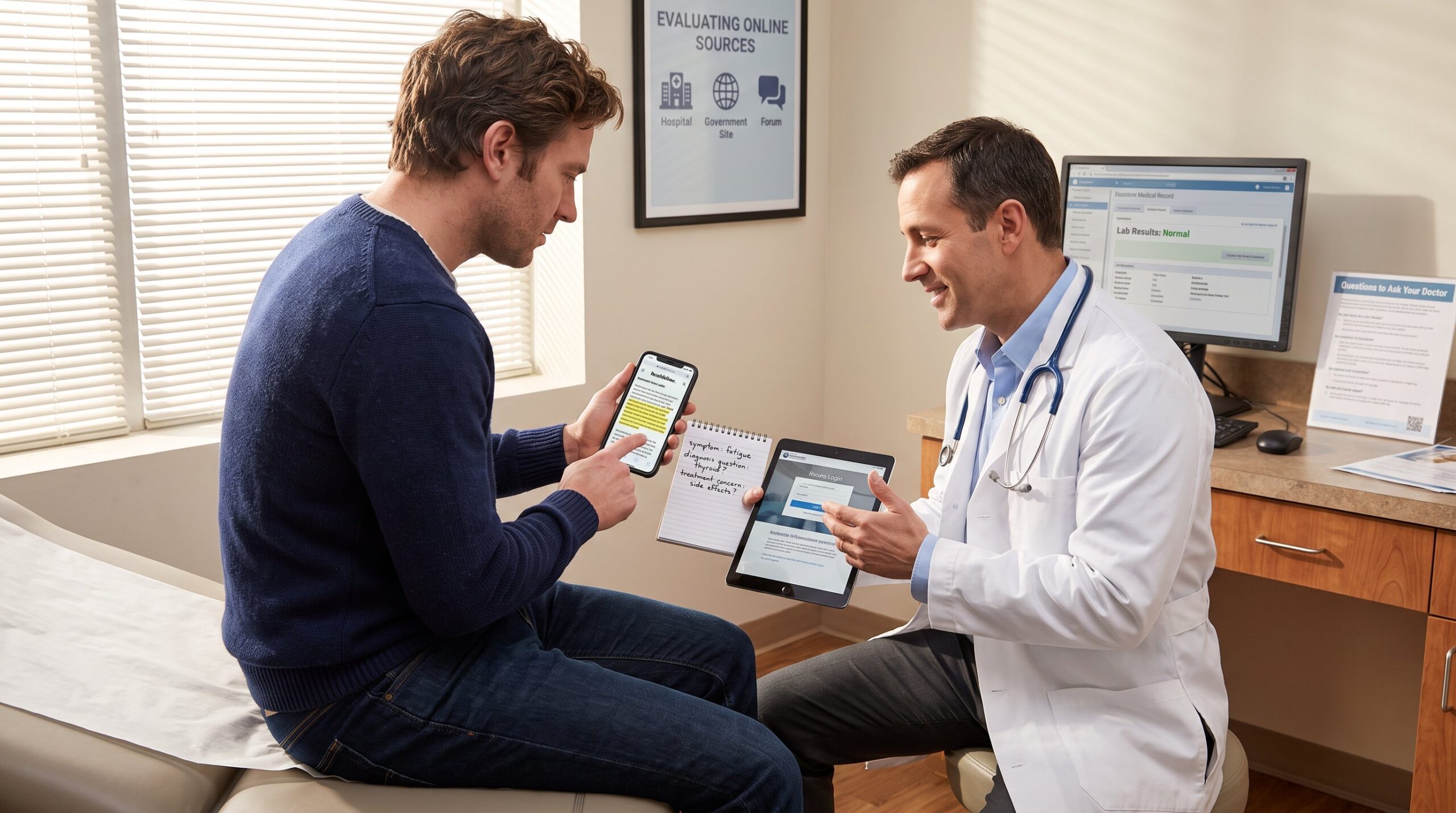
Answer up front: preparation reduces wasted minutes and clarifies next steps. Patients should choose three priorities: one symptom, one question about diagnosis, and one treatment or safety worry. That focused list fits most primary care visits and reduces the risk the clinician will run out of time.
Practical steps: jot the exact timeline of symptoms, note any recent tests or medications, and record the top three online claims that prompted concern. Instead of printing long articles, copy two short excerpts or write the site type (e.g., national health site, hospital, patient forum).
A spacing trick: put the most urgent item first. If a patient suspects an urgent issue, label it “urgent” on the note. For tool help and digital tips, patients can consult the site’s reader guide, which links reliable resources and explains site sections in plain language with helpful examples in this primer on reader resources. Also consider reviewing guidance on how to evaluate sources and how to prepare for appointments to avoid common missteps and save time.
How To Present Online Findings Clearly And Respectfully
Start with the concrete: describe symptoms and timeline, then say where the information came from and ask for interpretation. A patient might say: “I’ve had chest tightness for three days: I read on a hospital site that X can cause this, could you tell me if that applies?” That phrasing invites expertise and reduces defensiveness.
Tone matters: frame findings as questions, not prescriptions. Use “could this” or “how might this apply” rather than “I need X test.” Clinicians respond better when invited to interpret evidence. If the patient used a forum or social media, say so: admitting the source helps clinicians judge reliability.
Keep examples short: bring one printed excerpt or a single bookmarked paragraph. If the clinician wants more, they will ask for the source. This gentle, structured approach saves time and keeps the visit collaborative.
Questions To Ask During The Appointment To Turn Research Into Action
Direct answer: ask clear, testable questions that convert curiosity into clinical decisions. Examples that work: “Does this diagnosis fit my symptoms?” “What tests would confirm or rule this out?” and “What are the benefits and risks of that treatment for someone my age and health?”
Follow-up questions to request concrete next steps: “If that treatment isn’t right, what is plan B?” “How soon should I return if symptoms change?” and “Where can I read reliable guidance after this visit?” Asking for a single recommended page or patient handout helps with recall.
If the patient wants to review medical records or lab results later, clinicians may point to the patient portal. For a clear description of how portals let patients review information, see the patient portal overview at Mayo Clinic. These questions frame online research as part of shared decision-making rather than an alternative to it.
How Clinicians Typically Respond And How To Navigate Disagreements
Short answer: most clinicians accept informed patients but are cautious about misinformation. When disagreement appears, the most effective tactic is to request the clinician’s reasoning rather than insist on the online claim.
Example script: if a patient reads an aggressive treatment recommendation online, they can say, “This source recommends X: can you explain why you would or would not use X here?” That invites a breakdown of evidence, risks, and patient-specific factors. If the clinician disagrees, ask what evidence would change their opinion and whether a second opinion or follow-up test is reasonable.
Handling strong disagreement: request specific studies, time-limited trials, or a documented plan. If communication breaks down, patients can ask for written notes, a follow-up visit, or consult another clinician. For help preparing such questions ahead of time, SpringHillMedGroup offers practical advice on preparing for appointments and assessing digital tools that many patients find useful.
Conclusion
Insight first: discussing online health research with a clinician is a skill patients can learn. A focused prep list, respectful phrasing, and targeted questions turn online curiosity into safer, faster care. If an answer isn’t clear in the visit, ask for the clinician’s recommended reading or a follow-up plan. That small change, treating online findings as questions, not prescriptions, makes appointments more productive and less stressful.
About the Author