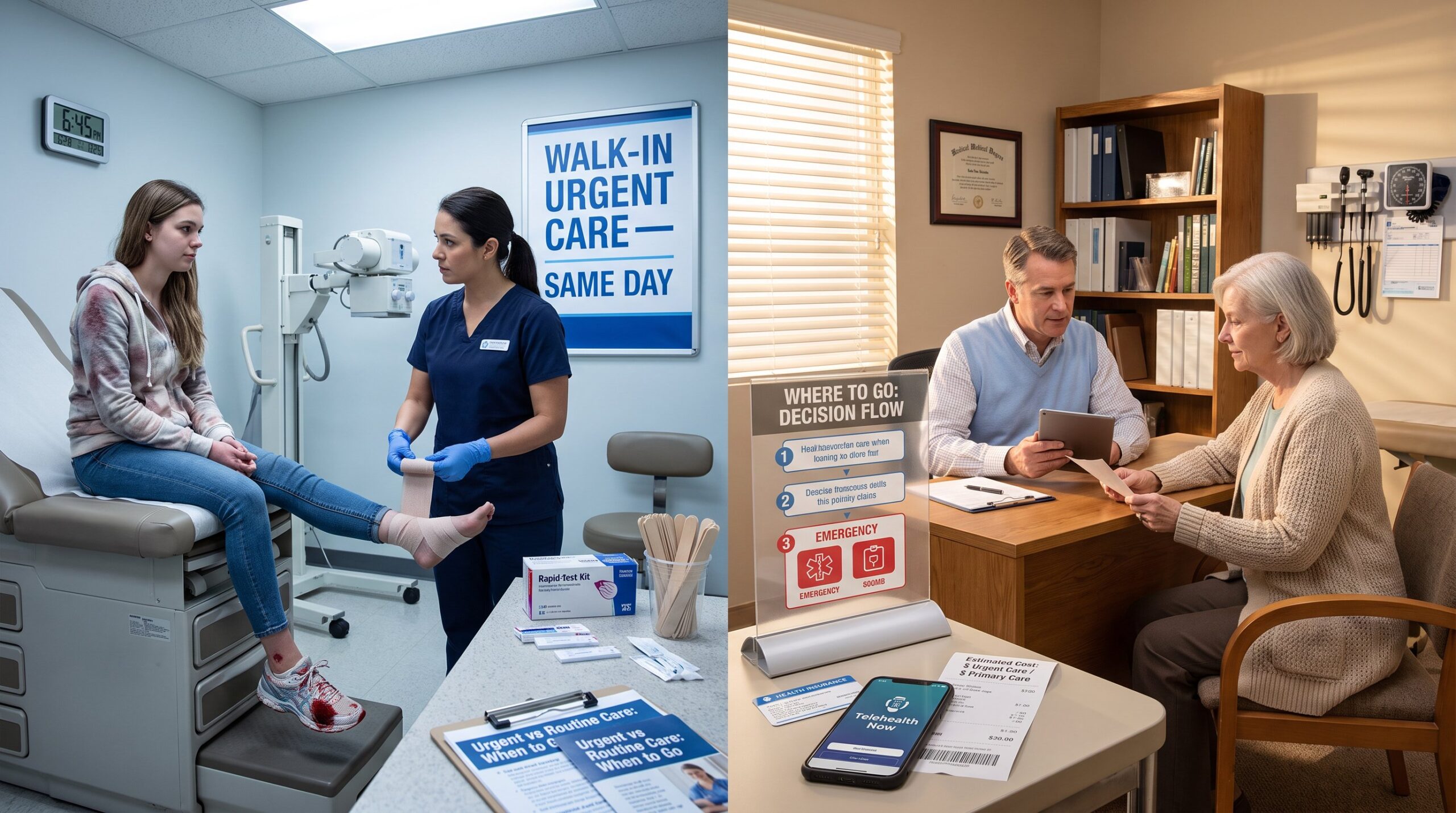
Urgent and routine care both treat non‑life‑threatening problems, but they serve different roles in a patient’s timeline. Urgent care is built for same‑day, walk‑in treatment of acute issues that started recently. Routine primary care focuses on ongoing prevention, chronic disease management, and continuity with a clinician. This guide gives clear rules of thumb, concrete examples, and practical cost and access tips so readers can choose the right setting quickly and avoid unnecessary bills or delays.
Key Takeaways
- Urgent care provides same-day treatment for acute, non-life-threatening issues like sprains or infections, while routine primary care manages long-term health, prevention, and chronic disease.
- Choose urgent care for sudden problems needing immediate attention and walk-in access, such as new fevers or minor injuries, and prefer primary care for ongoing treatment or preventive services like medication management and screenings.
- Urgent care visits often cost more and may include additional fees for labs or imaging, whereas primary care typically fits insurance copays and supports continuity of care with referrals and medication refills.
- A practical decision flow is to first rule out emergencies requiring ER, then assess if the issue is acute for urgent care or chronic and continuity-driven for primary care.
- Using urgent care as a substitute for primary care can fragment medical records and increase duplicated tests, so choosing the right care type helps avoid unnecessary costs and delays.
- Consult trustworthy online resources and follow practical guides to evaluate health information and prepare for visits to ensure effective care navigation.
How Urgent Care Differs From Routine Primary Care
Fact first: urgent care treats episodic, same‑day problems: primary care manages long‑term health and prevention. Urgent care centers accept walk‑ins and often run extended hours. They focus on acute injuries and infections that need prompt attention but are not life‑threatening. Primary care offers scheduled appointments, medical history review, chronic disease tracking (diabetes, hypertension), and preventive screenings.
Practical contrast: imagine a sprained ankle that happened this morning, urgent care provides an X‑ray, wrap, and return‑to‑work note same day. Now imagine a patient with rising blood pressure over months, primary care will order labs, adjust medications, and plan follow‑up. The two settings overlap: both can give vaccines or treat uncomplicated infections, but continuity and long‑term records live with primary care.
Operational differences that matter: urgent clinics tend to charge higher visit costs when billed as urgent services and may add fees for imaging or labs. Primary care visits commonly fit into insurance copay structures and support refills and specialist referrals. For readers wanting a primer on how to evaluate online health resources and trustworthy care options, a concise overview is available in the site’s reader guide on health information basics.
When to prefer urgent care: sudden fever with significant pain, new lacerations needing stitches, suspected minor fracture, or a urinary tract infection that started today. When to prefer primary care: ongoing cough lasting weeks, medication management, annual physicals, or problems that benefit from a clinician who knows the history.
Common Conditions And Examples: Urgent Care Vs Routine Visits
Short answer: choose urgent care for same‑day acute problems: choose routine visits for chronic or preventive needs. Below are concrete, numbered examples so readers can match symptoms to service.
Urgent care examples (typical uses):
-
- Flu symptoms with moderate fever and body aches that began within 48 hours. Urgent clinics can test for influenza and prescribe antivirals when appropriate.
-
- Sprain or localized swelling after a fall: urgent care can X‑ray and provide a splint.
-
- Deep cut that may need stitches. Urgent clinics often suture and provide tetanus checks.
-
- New urinary symptoms (burning, urgency) that began today: urgent care can run a urine test and start antibiotics.
-
- Minor burns, rashes, insect bites, and mild allergic reactions that don’t affect breathing.
Routine primary care examples (typical uses):
-
- Hypertension follow‑up and medication titration after repeated high readings.
-
- Diabetes management with lab review, medication changes, and referrals to dietitians.
-
- Annual wellness exams, age‑appropriate cancer screenings, and scheduled vaccinations.
-
- Mental health follow‑up and coordinated care across specialists.
-
- Symptoms that evolve over weeks, such as progressive fatigue or slowly worsening cough.
Concrete scenario: a patient with a sore throat and fever who also has severe difficulty swallowing should go to emergency services. But, if the throat pain started today and breathing is fine, urgent care will likely assess, test for strep, and prescribe antibiotics same day. For readers unsure about online resources on urgent visits, an article on online urgent expectations explains how virtual urgent visits handle similar complaints and what to expect on first use.
How To Decide: A Practical Decision Flow, Costs, And Access Tips
Direct answer: use a three‑step flow, check for emergency signs, judge urgency of onset, then weigh continuity needs and cost. Emergency signs (chest pain, severe shortness of breath, uncontrolled bleeding, sudden severe weakness) require the ER. If the problem is new and cannot wait days, urgent care is appropriate. If the problem is chronic or needs history, primary care wins.
Decision flow in practice: 1) Ask: is there life‑threatening risk? If yes → ER. 2) If no, ask: did the problem start recently and need same‑day care? If yes → urgent care or tele‑urgent visit. 3) If the problem relates to long‑term management, schedule with primary care and keep continuity.
Costs and numbers (typical U.S. ranges 2025–2026): primary care visits often run about $75–$171 without insurance: typical copays fall $20–$40. Urgent care visits often cost $100–$200+ without insurance: copays commonly hit $40–$75. Add tests like X‑rays or rapid labs and totals can exceed $300–$400 at urgent clinics. These numbers reflect national averages and will vary by state and facility.
Access tips and real tradeoffs: urgent centers offer walk‑in access and extended hours, making them ideal for sudden problems outside work hours. Primary care offers continuity, medication refills, and specialist referrals. For patients who find and confirm high‑quality health information online before a visit, a short checklist on evaluating online health information helps avoid misinformation and wasted visits.
Practical warnings: using urgent care as a substitute for primary care can fragment records and lead to duplicated tests. Conversely, waiting days for a primary care appointment for a problem that started today can allow an infection or injury to worsen. For first‑time telehealth users, the site’s guide about preparing for medical appointments offers concrete steps to bring medications, photos, and symptom timelines to a visit.
Conclusion
Key insight: urgent care solves same‑day, non‑life‑threatening problems: routine primary care prevents disease and manages chronic conditions. A simple three‑question flow, emergency signs, onset and urgency, need for continuity, lets patients choose quickly. When in doubt about severity, err toward emergency care. When comparing costs, remember urgent visits often include extra test fees. For readers who want to build smarter habits around health information and care navigation, the site’s practical resources can help shape better decisions and avoid unnecessary visits.
About the Author