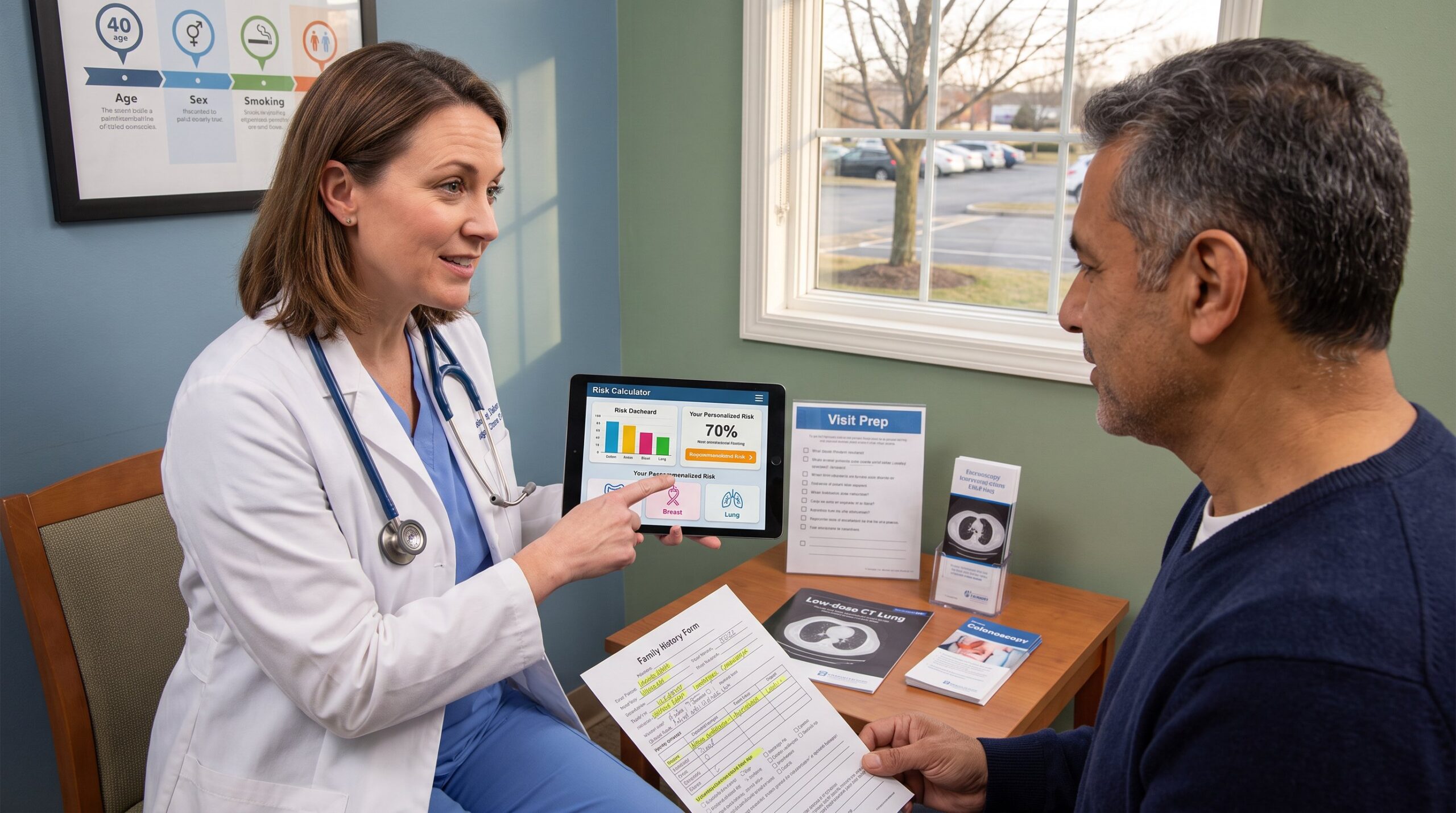
Why Health Screening Recommendations Vary by Person is a common question when someone gets a different schedule than a friend. This guide explains, in practical terms, why clinicians tailor screening based on measurable risk and lived context. It begins with the core idea, screening is about balancing benefit and harm for each person, then shows which facts change recommendations and how to get a plan that fits real life.
Key Takeaways
- Health screening recommendations vary by person because clinicians tailor them based on individual risk factors like age, genetics, lifestyle, and medical history.
- Screening aims to balance benefit and harm, avoiding both over-screening and under-screening to optimize health outcomes for each individual.
- Clinical guidelines provide general age ranges and intervals, but clinicians adjust these schedules using risk tools and personal context.
- Access to healthcare and local resources influence how screening recommendations are applied and followed in real-world settings.
- Patients should prepare personal health information and discuss risks and benefits with clinicians to create a personalized, practical screening plan.
- More frequent screening is not always better; unnecessary tests can cause harm, so it’s important to understand test accuracy and follow expert advice tailored to individual risk.
Why Screening Recommendations Vary: The Big Picture
Screening guidance varies because population averages don’t capture individual risk. Clinicians and guideline groups start with large studies that give average benefit and harm estimates. Then they adjust for the person in front of them: age, sex, genetics, lifestyle, comorbidities, and social factors. That adjustment changes the predicted benefit of finding disease early and the predicted harm from false positives, needless procedures, or anxiety.
Surprise: two people aged 52 with identical blood tests can get different colonoscopy schedules because one has a family history of colorectal cancer and the other does not. Evidence shows both over‑screening and under‑screening cause harm, over‑diagnosis, unnecessary treatment, missed work, and complications, so the aim is the best net benefit for that person, not maximal testing for everyone.
How guidelines behave: bodies like national panels publish age ranges and intervals based on trials. Clinicians then use risk tools or clinical judgment to move someone into an earlier, later, or different path. Access also matters: insurance, clinic availability, and local screening programs shape what’s practical and recommended in real settings.
Key Personal Factors That Change Screening Advice
Age, sex, medical history, and family background are the main reasons two otherwise similar people receive different screening advice. This section lays out those factors and why they matter.
How Clinical Evidence And Guidelines Adapt To Populations
Fact first: guideline panels translate trial and registry data into age ranges and intervals, then note when risk stratification should change those defaults. Large trials give averages: subgroup analyses and observational studies inform how recommendations shift for specific groups.
For example, colorectal screening guidelines for average risk use population data to set typical start ages. When trials show higher yield in certain groups, panels include exceptions and risk‑assessment triggers. Risk calculators and familial risk models help clinicians apply those exceptions to individuals.
Context and access shape application. Studies repeatedly find rural residents or people without a usual care source receive fewer recommended screenings even though guideline clarity. That’s an implementation gap rather than a flaw in evidence. To bridge that gap, patients can use local clinic programs or targeted outreach, practical steps discussed in the site’s reader resources on evaluating health information and preparing for clinic visits.
Related resources: clinicians and patients can compare guideline nuances with trustworthy summaries, such as the site’s article about the lifesaving role of routine screenings and material that explains how to evaluate health information online. These pages help people decide how population guidance applies to them: proactive health, evaluate health information, and the required reader resource on navigation and online tools: reader resources.
How To Get A Personalized, Practical Screening Plan
Fact first: use guideline schedules as a baseline, then tailor them with a clinician who knows the person’s risks, preferences, and life context.
Stepwise approach: 1) start with average‑risk schedules for age and sex: 2) list family history, prior tests, and chronic conditions: 3) discuss harms and benefits with the clinician: 4) decide on timing and test type that fit medical needs and daily life.
Concrete example: a 48‑year‑old smoker with high blood pressure might pair routine lipid panels and blood pressure checks with earlier lung cancer screening via low‑dose CT if the smoking history meets criteria. A 55‑year‑old without risk factors may follow standard colon cancer screening intervals instead.
Practical tools include family history forms, prior pathology reports, and a short questionnaire before the visit. Patients who prepare this information often get a tighter, safer plan. The site’s practical visit checklist explains how to prepare: prepare for appointment.
When to ask for more: request a risk‑stratified discussion if the person has strong family history, a known genetic mutation, or unusual exposures. If a clinician recommends stopping a routine screen, ask for the data and the reasoning, some tests are appropriate to stop at advanced age or severe comorbidity, as noted by major expert reviews.
Common Misunderstandings About Screening Frequency And Necessity
Fact first: more screening is not always better. Overscreening leads to false positives, unnecessary biopsies, and sometimes harm from treatment that never benefited the patient.
Common myth: “If I feel fine, I don’t need screening.” Reality: many screenings detect silent disease. Early‑stage cancers and high blood pressure often cause no symptoms. Another myth: “Average‑risk rules fit everyone.” Reality: average‑risk guidance misses those with higher or lower baseline risk.
Concrete numbers: screening colonoscopy harms are rare but real, perforation rates are roughly 1 per 1,000 to 1 per 10,000 depending on context, so repeating tests more often without need increases cumulative harm. Similarly, breast cancer screening picks up many early lesions, but some would never progress: guideline groups try to balance detection against over‑diagnosis.
Practical warnings: ask about test sensitivity, false‑positive rates, and next steps if a screen is abnormal. If someone has unclear or conflicting advice online, the site offers steps for vetting information and questions to ask before acting on medical advice, which can improve decision quality: evaluate online health info, questions before acting.
Optional verification: for specific cancer screening claims, reputable sources such as Healthline summarize breast screening options and expectations. Clinicians often use primary evidence and guideline statements rather than single secondary articles when making individualized recommendations.
About the Author