General wellness content appears everywhere and promises simple fixes for sleep, diet, stress, and fitness. General wellness content can encourage healthier habits, but it cannot replace professional evaluation, diagnostic testing, or individualized treatment plans. This article explains where popular wellness advice helps, where it fails, and how readers can spot moments that require urgent medical attention.
Key Takeaways
- General wellness content promotes healthy habits but cannot replace professional medical evaluation or personalized treatment plans.
- Recognizing urgent warning signs like prolonged fever, chest pain, or neurological changes is crucial and requires immediate medical attention.
- Relying solely on wellness articles or social media advice risks delayed diagnosis, harmful self-treatments, and misinformation-driven choices.
- Always verify wellness advice by checking authorship, evidence, and personal health factors before making changes or stopping medications.
- Use wellness content as a supplement to, not a substitute for, consulting healthcare professionals when symptoms persist or escalate.
- Preparing for medical appointments with symptom records and test results improves diagnosis and care efficiency.
Why General Wellness Content Is Popular — And Where It Falls Short
Why general wellness content is popular, and where it falls short
General wellness content wins because it is free, fast, and easy to read. It gives clear steps: sleep earlier, move more, reduce sugar. Those simple rules work for many people and produce measurable gains, for example, a basic sleep schedule can improve daytime alertness within two weeks. But popularity masks limits. Many wellness posts lack primary research, named clinicians, or quality review. That gap matters: condition-specific medical content generally rates higher for accuracy than broad wellness pieces.
Readers should notice authorship and citations. If tips come from unnamed influencers or single anecdotal cases, the advice may not apply to someone with chronic illness, pregnancy, or a complex medication list. Social platforms amplify reach but often strip nuance. The result: easy wins for general habits, but weak or missing guidance for diagnosis, risk assessment, and personalized treatment.
Practical detail: a wellness checklist rarely accounts for lab values, imaging results, or comorbidities. For those, a clinician uses history, exam, and tests, resources a blog post cannot replicate.
Common Warning Signs That Require Professional Medical Evaluation
Common warning signs that require professional medical evaluation
High fever lasting more than three days, new chest pain, sudden shortness of breath, severe abdominal pain, or blood in vomit or stool are red flags that need immediate evaluation. Persistent or worsening symptoms, sudden neurological changes (slurred speech, weakness, vision loss), suicidal thoughts, or marked functional decline also require urgent attention.
These signs matter because they predict conditions where delay increases harm. For instance, untreated chest pain can represent myocardial infarction: prolonged fever with focal pain can signal deep infection. Harvard Health lists similar urgent signs, emphasizing that some care cannot safely wait. summary guidance
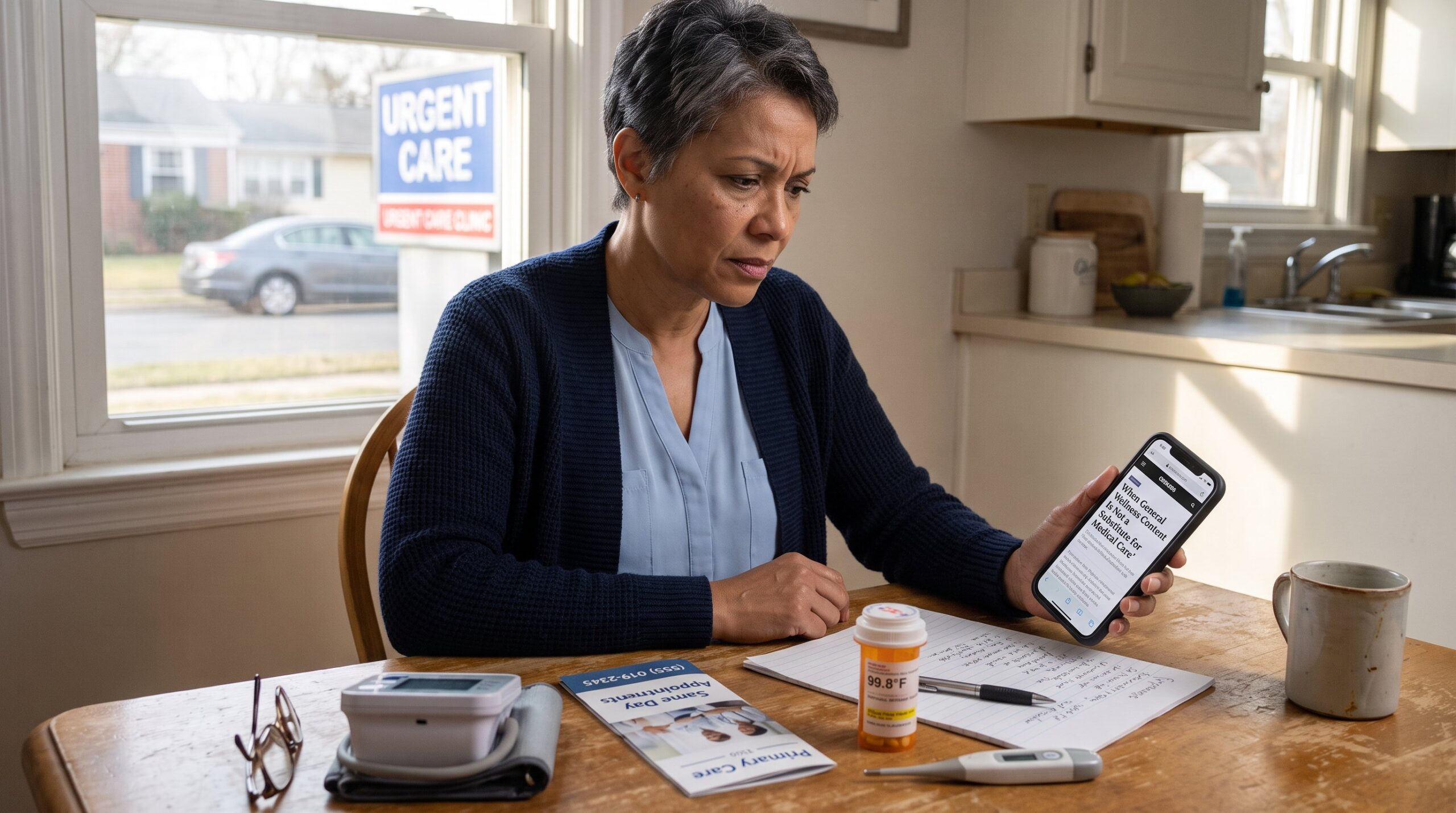
A practical rule: if a symptom changes daily in severity or you can’t perform usual tasks, seek evaluation. When in doubt, a same-day primary care visit or urgent care clarifies risk and prevents missed diagnoses.
Risks Of Relying Solely On Wellness Advice From Articles Or Social Media
Risks of relying solely on wellness advice from articles or social media
Self-care articles give quick steps but can create an illusion of safety. Relying only on them increases three concrete risks: delayed diagnosis, harmful self-treatments, and misinformation-driven choices.
Delayed diagnosis and missed red flags
Delayed diagnosis happens when someone follows an online checklist instead of getting evaluated. Studies show self-diagnosis via web content contributes to missed or late diagnoses, especially for complex conditions like cancer or autoimmune disease. Social posts that downplay screening or push unproven alternatives have led some people to present at later disease stages. In numeric terms, reviewers report that up to 30% of cancer-related social posts contain misinformation, often with potentially harmful recommendations.
Potentially harmful or contraindicated self-treatments
Wellness feeds promote remedies that are untested or interact with medicines. Examples include high-dose herbal extracts that impair liver function, or substituting prescribed antidepressants with supplements without medical oversight. Incorrect dosing, unknown sourcing, and interactions cause real harm: hospitalizations for herbal toxicity and treatment delays for infections are documented outcomes. When someone considers a new supplement or stops a prescribed drug, they should consult a clinician first.
How To Use Wellness Content Responsibly And Know When To Seek Care
How to use wellness content responsibly and know when to seek care
Use wellness content as habit guidance, not diagnosis. Start with clear, cited articles that state limits and authorship. Practical steps: verify a claim against trusted medical pages, cross-check with a clinician before changing prescriptions, and track objective measures (temperature, blood pressure, weight) rather than relying only on feeling.
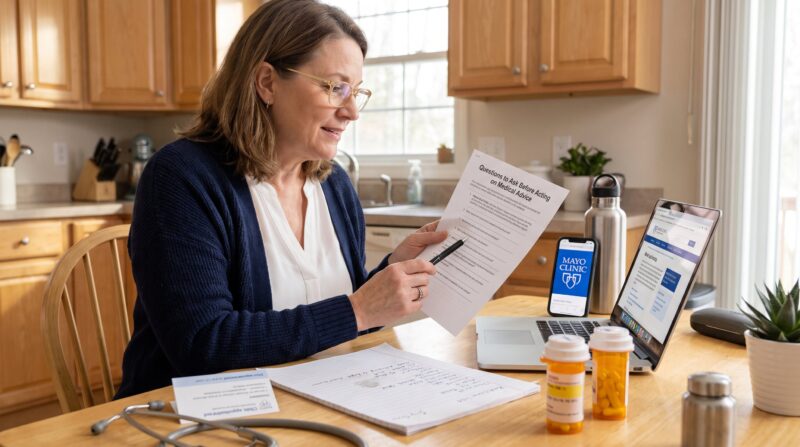
A readers’ next move: consult structured resources. For example, a concise reader’s guide helps people evaluate online health material and avoid low-quality sources. Similarly, an article about how to evaluate health information lists questions to test credibility.
Before acting on general advice, ask three questions: Who authored this? What evidence supports the claim? Do personal factors (age, pregnancy, medications) change relevance? If any answer is unclear, contact a clinician. Preparing for that visit improves efficiency: a practical step-by-step prep checklist exists for patients to bring symptoms, medications, and recent tests to appointments. appointment preparation
One honest lesson: a patient once delayed reporting persistent cough after following home remedies: later imaging showed a treatable pneumonia. The takeaway: simple tips help short-term comfort, but worsening signals need evaluation.
Conclusion
Conclusion
General wellness content can nudge habits and provide useful tips, but it is not a substitute for medical care when warning signs, persistent symptoms, or treatment decisions are involved. Readers benefit most by combining reliable wellness guidance with primary medical services, careful evaluation of sources, and timely professional consultation. When symptoms escalate, act early, small delays sometimes cause large health consequences.
Supplemental links and resources
Supplemental links and resources
For context on accurate health communication and why quality matters, SpringHillMedGroup has a practical piece on accurate medical content. Seniors facing loneliness and complex needs may need a mix of companionship for seniors and clinical oversight. Primary care plays a key role across life stages: see a primer on primary medical care.
When choosing ongoing outpatient services, patients should compare credentials, access, and continuity: an article on how to choose a private clinic lists practical criteria. For those managing long-term conditions, the site’s guide to wellness and chronic illness offers strategies that align lifestyle care with medical monitoring.
Practical external reference: a consumer-facing checklist covers when to book a doctor appointment and what to expect from scheduling. appointment guidance
About the Author