But when it comes to mental health, most of us were never taught where normal stress ends and a real mental health struggle begins. And that gap in knowledge costs people. Sometimes it costs them years.
This guide is for every mom who has looked at someone she loves and thought, something feels off, but I don’t know what to do about it.
Moms notice everything. The way their kid’s laugh changes. The look on a partner’s face at dinner. The slight shift in a friend’s voice over the phone. We notice because we care, and because somewhere deep down, we know that the small things often signal something bigger.
But when it comes to mental health, most of us were never taught where normal stress ends and a real mental health struggle begins. And that gap in knowledge costs people. Sometimes it costs them years.
This guide is for every mom who has looked at someone she loves and thought, something feels off, but I don’t know what to do about it.
Why Mental Health Is Harder to Spot Than Physical Health
If your child breaks a leg, you can see it. If your partner has a high fever, you can measure it. But mental health doesn’t come with visible signs, at least not at first.
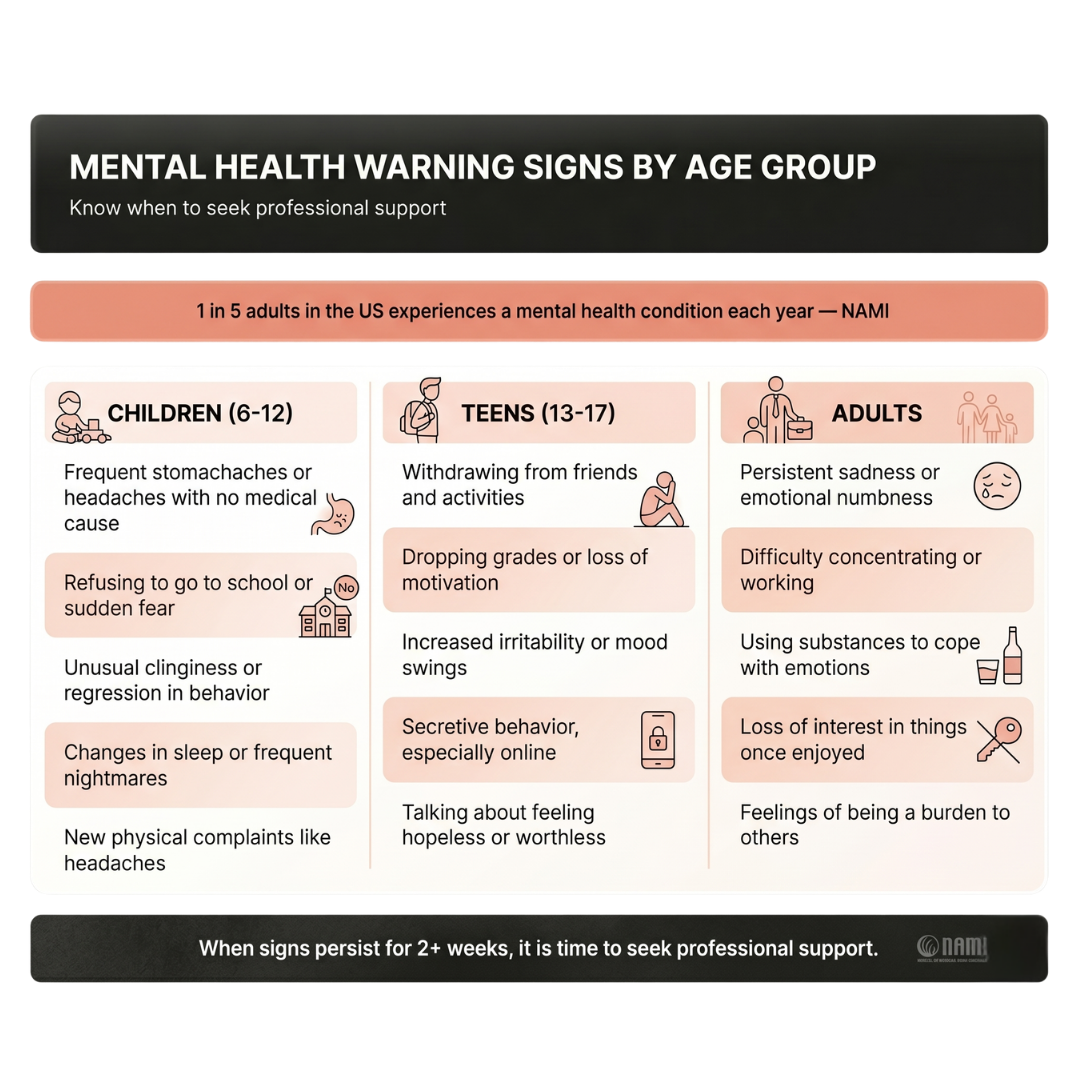
According to the National Alliance on Mental Illness (NAMI), 1 in 5 adults in the United States experiences a mental health condition each year. And yet, the average delay between the onset of symptoms and treatment is 11 years. Eleven years. Not because people don’t want help, but because they, and the people who love them, often don’t recognize what they’re seeing.
The earlier a mental health challenge is identified and treated, the better the outcome. That’s not an opinion, it’s what decades of research consistently shows.
The Signs That Are Easy to Dismiss
Here’s what makes mental health warning signs especially tricky for moms: many of them can look like other things. Exhaustion. Stress. A rough week. Teenage moodiness. Normal life.
But there are patterns worth paying attention to.
For children and teens, watch for:
For adults, including partners, siblings, and yourself:
The key word here is persistent. One bad week doesn’t equal a mental health crisis. But when these signs show up consistently over two weeks or more, it’s worth taking seriously.
When Support From Family Isn’t Enough
Moms are often the first line of support for everyone around them. And that’s a role most of us take seriously. But there’s a difference between support and treatment.
Love, presence, and encouragement matter more than we can measure. But some mental health conditions, like major depression, generalized anxiety disorder, PTSD, and bipolar disorder, require professional clinical care. Not because the person isn’t trying hard enough. But because these are medical conditions with biological components that respond to evidence-based treatment.
Trying to support a loved one through a serious mental health condition without professional help is like trying to treat a broken bone with encouraging words. You can sit with someone, love them, and be completely devoted to their recovery, and they can still need structured clinical support to actually get better.
Understanding the Levels of Care
One reason families wait too long to seek help is confusion about what getting help actually means. There’s not just one option. There’s a range of care.
Outpatient Therapy: Weekly or bi-weekly sessions with a therapist. Best for mild to moderate challenges that aren’t disrupting daily functioning.
Intensive Outpatient Programs (IOP): Multiple sessions per week, often 3 to 5 times, without requiring an overnight stay. A good fit for people who need more than weekly therapy but can still manage daily life at home.
Partial Hospitalization Programs (PHP): A structured daily program, typically 5 days a week, for several hours each day. For people who need a higher level of support but don’t require overnight care.
Residential Treatment: Full inpatient care for those who need 24/7 support and a safe, structured environment to stabilize and begin recovery.
Knowing these options exist means you’re better equipped to advocate for your loved one when the time comes.
What to Say When You’re Worried About Someone
You’ve noticed the signs. You’ve done some research. Now you have to actually say something.
Taking Care of Your Own Mental Health Too
Here’s something we don’t talk about enough: advocating hard for someone else’s mental health while neglecting your own is not sustainable.
If you are exhausted, anxious, grieving, or struggling, you deserve care too. Not after everyone else is okay. Now.
Programs like intensive outpatient care aren’t just for severe cases. If you or someone you love has reached the point where weekly therapy isn’t enough but daily life still needs to be managed, learning about structured mental health programs is a strong first step.
Resources Worth Bookmarking
About the Author